
Smart Tips for Lowering Your Utility Bills This Fall (Infographic Included!)
As fall approaches and temperatures start to cool, it’s a great time for tenants to think about how to make their living spaces cozier while also saving on utility bills. With gas, water, and energy costs still climbing, finding ways to reduce these expenses is a smart move. Plus, by implementing a few easy strategies,

Anna L.
5 min read

As fall approaches and temperatures start to cool, it’s a great time for tenants to think about how to make their living spaces cozier while also saving on utility bills. With gas, water, and energy costs still climbing, finding ways to reduce these expenses is a smart move. Plus, by implementing a few easy strategies, you can enjoy a more comfortable home without breaking the bank.
While you may not have the same level of control as homeowners over energy-saving upgrades, there are still plenty of steps you can take as a tenant to make a difference. When you’re renting, making significant changes like upgrading appliances or weatherproofing might be limited by lease agreements, but that doesn’t mean you’re out of options. In fact, you can make a meaningful impact with simple adjustments that not only save you money but also contribute to a more sustainable lifestyle.
The rental market has seen increased demand due to recent events, and this has driven up rental costs. With rising expenses, it’s important to be proactive about finding ways to save. This article will provide you with a range of strategies to lower your utility bills this fall, allowing you to enjoy a comfortable living environment without the added stress of high energy costs. From small habit changes to smart technology usage, you’ll discover practical tips tailored to your tenant experience. So, get ready to embrace the coming season with money-saving solutions that benefit both your wallet and the environment.
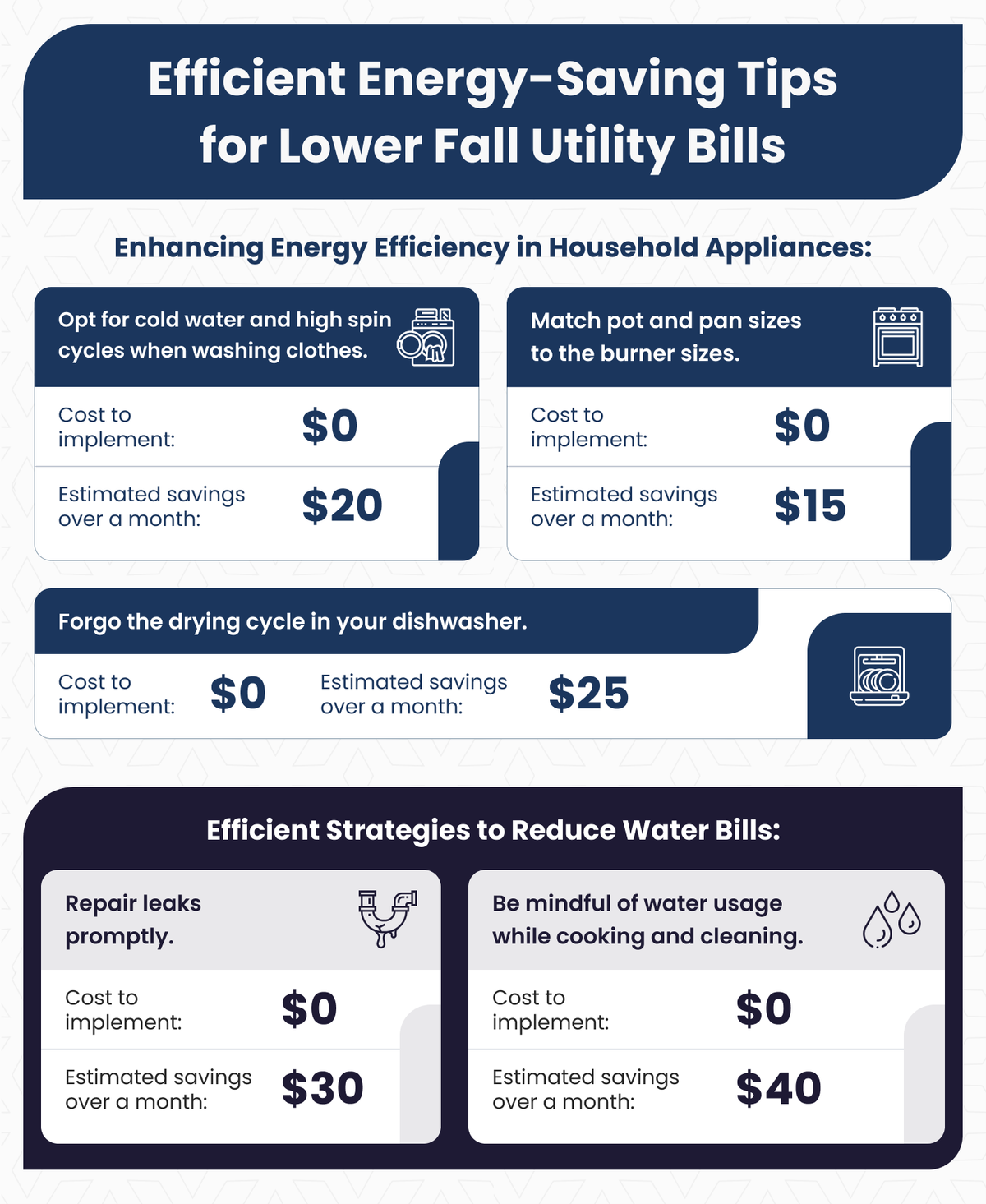
Enhancing Energy Efficiency in Household Appliances
Even the smallest adjustments can make a significant difference in reducing your electricity bills when it comes to household appliances like washers, dryers, stoves, and dishwashers. Here, we offer some valuable energy-saving recommendations for optimizing the usage of these appliances.
Opt for cold water and high spin cycles when washing clothesCost to implement: $0
You might be surprised by how effectively cold water can clean your clothes while also conserving energy. Using hot water for laundry not only consumes more electricity as your water heater works harder, but it can also wear out your clothes faster. Furthermore, setting your washing machine to a high spin cycle results in less damp clothes entering the dryer, ultimately reducing the time needed for drying and, subsequently, your energy consumption.
Match pot and pan sizes to the burner sizesCost to implement: $0
A simple yet impactful change in the kitchen is to use appropriately sized pots and pans for each burner. Opt for smaller burners when cooking with small saucepans. Using larger burners when not needed consumes unnecessary energy and contributes to needless waste.
Forgo the drying cycle in your dishwasherCost to implement: $0
Instead of relying on your dishwasher’s drying function, consider allowing your dishes to air dry. In reality, even with the drying cycle, some items often come out wet. After your dishwasher completes its cycle, crack the door open to let evaporation naturally dry your dishes. (Bonus tip: Using the dishwasher, even with a partial load, is more energy-efficient than handwashing dishes.) This small change can yield substantial savings over time.
Efficient Strategies to Reduce Water Bills
Minimizing your water bills involves simple yet impactful changes that can contribute to significant savings over time. From optimizing water usage in various areas of your home to adopting mindful habits, here are some effective recommendations for conserving water and reducing your monthly bills. Conserving water not only reduces your bills but also contributes to sustainable living practices that benefit us all.
Repair leaks promptly
Addressing leaks in faucets, pipes, and toilets should be a top priority. Even small leaks can waste a considerable amount of water over time, leading to higher bills. Regularly inspecting and promptly fixing leaks can help prevent water wastage and save you money in the long run. If you notice any leaks in your rental property, make a maintenance request to your landlord to address them as soon as possible. Promptly addressing these issues can prevent water wastage and potential damage to the property.
Be mindful of water usage while cooking and cleaningCost to implement: $0
Simple habits in the kitchen can lead to substantial water savings. When washing dishes by hand, fill one basin with soapy water for washing and the other with clear water for rinsing. Instead of letting the tap run, use a bowl to rinse fruits and vegetables. These small adjustments can collectively reduce water consumption.
Landscape wiselyCost to implement: Varies based on landscaping choices
Efficient landscaping can significantly impact water usage. Choose native plants that require less water and consider using mulch to retain soil moisture. Use a drip irrigation system to water plants directly at the root, reducing evaporation and water waste.
Install rain barrelsCost to implement: Varies based on the type of rain barrel
Collecting rainwater using rain barrels is an eco-friendly way to water your garden or plants. Rainwater is free and untreated, making it an ideal option for outdoor watering. Installing rain barrels can also help you reduce reliance on municipal water supplies.
Tenant-Friendly Tips for Reducing Gas Bills
Lowering your gas bills not only keeps your expenses in check but also contributes to a more eco-friendly lifestyle. By adopting a few straightforward habits and making conscious changes, tenants can make a significant impact on their gas consumption and enjoy financial savings over time. Here are some practical strategies tailored to tenants:
Optimize thermostat settingsCost to implement: $0
During the colder months, consider adjusting your thermostat a few degrees lower when you’re away or asleep. For added convenience, you can explore a programmable thermostat that automatically adapts to your daily routine, ensuring efficient energy use.
Seal windows and doorsCost to implement: Varies based on materials
Prevent drafts by using weather stripping or draft stoppers to seal gaps around windows and doors. This helps retain heat indoors and reduces the need for excessive heating.
Use window coverings effectivelyCost to implement: $0
Open curtains during the day to let sunlight naturally warm your space, and close them at night to retain heat. This simple technique minimizes reliance on your heating system.
Report maintenance issues promptlyCost to implement: $0
Make maintenance requests to your landlord for issues like leaky faucets or malfunctioning heating systems. Prompt repairs can prevent gas wastage and ensure your heating system operates efficiently.
Share this article
More articles
 Tenants
How to Rent an Apartment: Total Step-by-Step Guide
Figuring out how to rent an apartment or house for the first time can be an exciting and overwhelming experience. To make the process as easy as possible, it’s important to be prepared and to know what to expect. Getting Started: Renting an Apartment for the First Time Renting your first place is a major
Anna L.
 Tenants
What Do Apartments Look For in Background Checks?
If you’re currently apartment hunting, you know it’s common to send multiple applications before finding the right apartment and moving in. With each application, you also generally submit a background check and pay an application fee at some point. But what do apartments look for in background checks? And why do they need to do
Nadiia
 Tenants
Locked Out of Your Apartment? Here’s What to Do
Getting locked out of apartment buildings is scary, especially late at night. Panic is a common response, but it usually doesn’t help the situation, and it can make it more difficult to think clearly. In this guide from Rentler, you’ll find step-by-step instructions for if you’re locked out of the house: what to do, who
Nadiia