

Cost of living has been a pressure point for renters pretty much everywhere over the last few years. But the gap between the most and least expensive states is still enormous – and for people with some flexibility on where they land, that gap represents real money.
Here’s a look at the 10 cheapest states to live in right now, based on Q1 2026 MERIC data and current median rent figures. Then we’ll talk about the honest tradeoffs the glossy relocation guides tend to skip.
How We Ranked the Cheapest States to Live In
Rankings here use the MERIC (Missouri Economic Research and Information Center) cost-of-living index, which scores states against a national baseline of 100. Anything below 100 is cheaper than average, and anything above is pricier. The index pulls six components: housing, utilities, groceries, transportation, healthcare, and miscellaneous goods.
We also looked at median rent data from ApartmentAdvisor and Census Bureau figures, and layered in tax burden data from the Tax Foundation where relevant. MERIC’s methodology isn’t perfect – it averages metro-area data, so rural parts of a state often come in even cheaper than the index suggests – but it’s the most consistent state-level comparison tool available.
One honest caveat: cheapest doesn’t automatically mean best fit. Job market depth, climate, healthcare access, and quality of life all matter, and they don’t show up in a cost-of-living index.
The states on this list are genuinely affordable, but that doesn’t mean they’re all equally livable for every person.
1. Oklahoma — MERIC Index: 83.5
Oklahoma grabs the top spot on MERIC’s Q1 2026 index with a score of 83.5. Housing is the main driver – Oklahoma City and Tulsa offer some of the most affordable urban rents in the country, and the current median rent statewide sits around $847 per month. That’s for a real apartment in a real city, not a rural compromise.
Oklahoma City has grown considerably as a food and arts scene over the last decade, and Tulsa has benefited from remote-worker incentive programs that brought in outside investment and talent. The economy leans on energy, agriculture, and aerospace.
The honest tradeoffs: wages run lower than coastal averages, tornado season is a genuine consideration, and if you’re in a field that requires a specific employer ecosystem, the options outside OKC and Tulsa get thin quickly.
2. Alabama — MERIC Index: 85.0
Alabama has something the other cheapest states often lack: a genuinely booming city in Huntsville, which has become one of the fastest-growing metro areas in the Southeast on the back of aerospace, defense, and tech investment. Statewide median rent runs around $872 per month, but Huntsville’s growing demand is pushing prices higher there specifically.
Birmingham is a larger city with a developing food scene and improving neighborhoods. Mobile is coastal and has a different feel from the rest of the state. For renters who want affordability without total rural isolation, Alabama has more options than its reputation suggests.
The tradeoffs: humidity is brutal in summer, school quality varies significantly by district, and if Huntsville isn’t in your field, the broader job market is less dynamic.
3. Mississippi — MERIC Index: 86.2
Mississippi is consistently one of the two cheapest states to live in the US. with median rent running around $825 per month statewide. Jackson, Gulfport, and Hattiesburg are the main rental markets, and all three offer significantly more apartment inventory than people expect.
If you’re a remote worker, a retiree, or someone whose income isn’t tied to local job availability, Mississippi’s affordability is hard to beat. Utilities are low, food costs are low, and property taxes are among the lowest in the country.
The tradeoffs are real, though. Median household income is the lowest in the nation, which affects local economic vitality. Job growth is slower than in most of the South, and some areas have public school quality issues that matter to families.
4. Kansas — MERIC Index: 87.6
Kansas is quietly one of the most affordable states in the country and never quite gets the credit it deserves for it. Median rent currently sits around $775 per month, and Wichita (the largest city) offers a reasonable urban experience at a fraction of the cost of comparable metros elsewhere.
Kansas City on the Kansas side (not to be confused with Kansas City, Missouri, which is its own separate city) gives renters access to a genuine metro area’s amenities. Topeka is slower but extremely affordable. The state has solid manufacturing, aerospace (Wichita is a hub), and agriculture sectors.
Tradeoffs: limited job diversity outside the major metros, brutal summer heat in the southern parts of the state, and the cultural landscape is genuinely less diverse than either coast. Winters are also quite cold.
5. West Virginia — MERIC Index: 87.9
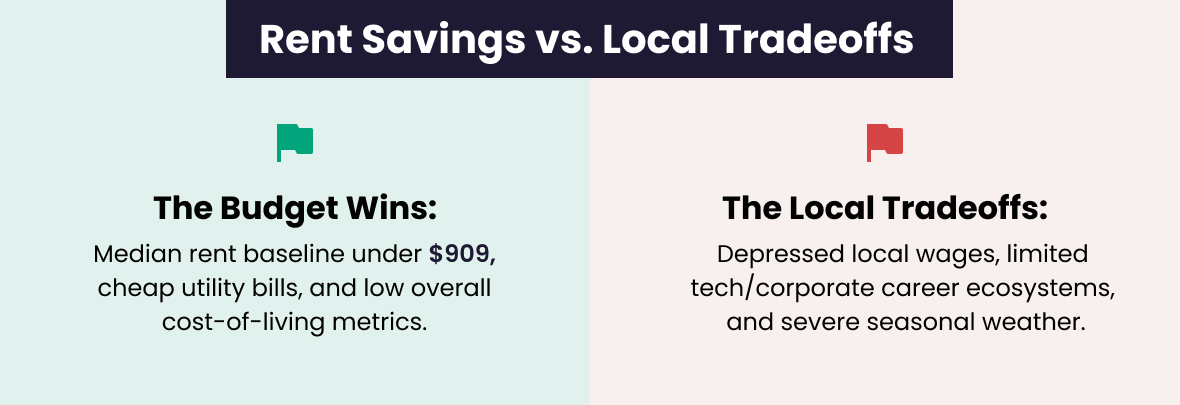
West Virginia claims the title of most affordable state for renters at just $750 per month median, which makes it genuinely anomalous – a state where a decent apartment in a small city costs less than a car payment in most of the country.
Morgantown, home to West Virginia University, has more economic activity and housing demand than the rest of the state and tends to run slightly higher. Charleston is the capital and the largest city; it’s modest but functional. The natural beauty – Appalachian trails, rivers, state parks – is real and underappreciated.
The tradeoffs are significant. West Virginia’s rental market offers the most affordable rents, but the job market is limited, population has been declining in parts of the state for years, and economic opportunity for younger workers is constrained unless you’re remote or in healthcare or education. This state works best for people whose income travels with them.
6. Indiana — MERIC Index: 88.3
Indiana’s affordability story is getting better attention lately because Indianapolis has developed into a legitimate mid-sized city with a growing tech, logistics, and healthcare sector. Statewide median rent is currently around $915 per month. Fort Wayne is one of the most affordable cities in the entire country. Bloomington has a university-town energy and outdoor access.
The state’s central region – within a day’s drive of Chicago, Cincinnati, Columbus, and Louisville – is a practical advantage that renters who travel frequently appreciate.
Tradeoffs: Some parts of Indiana have significant industrial legacy and associated environmental concerns, winters are cold, and cultural amenities outside Indianapolis and Bloomington are limited.
7. Iowa — MERIC Index: 88.6
Iowa median rent sits below $1,300 statewide – ApartmentAdvisor currently puts it at about $865 per month. Des Moines has matured into a genuinely livable mid-size city with a stable financial services and insurance sector. Cedar Rapids has manufacturing and a lower cost base. Iowa City, while driven by the university, has a cultural energy that punches above its size.
The economy is stable in a way that less flashy states sometimes are – it’s not explosive growth, but not decline either. Unemployment tends to run below the national average.
The tradeoffs most often cited: harsh winters (Iowa winters are decidedly not mild), geographic diversity is limited, and if you want mountains, coastline, or major-city energy, it’s simply not here. For people who prioritize stability and low costs over excitement, it’s a solid pick.
8. Missouri — MERIC Index: 88.6
Missouri’s Q1 2026 MERIC index lands at 88.6, tied for seventh lowest in the country. Statewide fair market rent averages around $1,059 per month – well below the national average – and Joplin, the state’s most affordable city, has its own index of just 83.7.
Kansas City is the more dynamic market at around $1,305 per month, with a solid economy across logistics, healthcare, and financial services. St. Louis runs cheaper at roughly $1,093 per month and has genuine urban neighborhoods at prices that don’t exist in comparable cities elsewhere. Springfield is the sleeper pick – around $966 per month with Ozarks access built in.
The tradeoffs: no income tax advantage like Tennessee, winters range from cold to genuinely rough depending on where you are, and the tech job market is thinner than Indiana’s. Strong pick for remote workers and healthcare professionals.
9. Tennessee — MERIC Index: 88.9
Tennessee comes with a significant asterisk: Nashville rents have risen sharply, and the city competes with much larger metros on price. But Memphis, Knoxville, and Chattanooga are still meaningfully affordable – statewide median rent sits around $1,045 per month, dragged up by Nashville.
The draw Tennessee has that others on this list don’t: no state income tax on wages. That’s a real take-home pay difference for higher earners. Chattanooga specifically has become something of a remote-worker darling for its combination of affordability, outdoor access, and decent infrastructure.
Tradeoffs: costs are rising in most parts of the state, not just Nashville. If you’re looking at this as a long-term affordability play, the trajectory matters.
Tips for Moving to a Cheaper State
A few things that don’t make it into the rankings but should inform your decision:
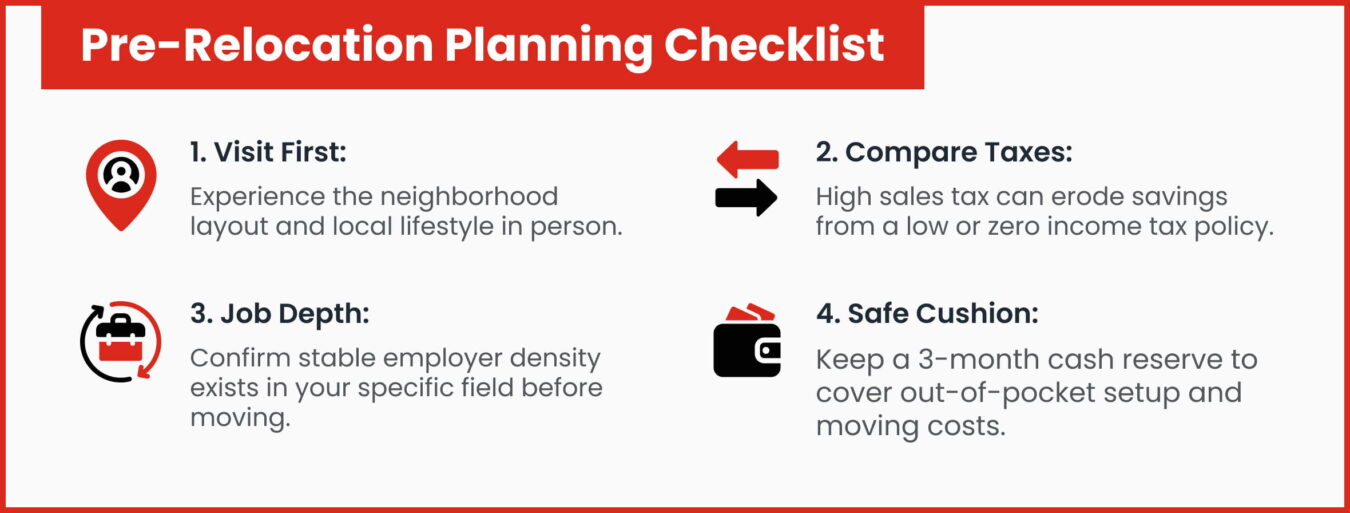
- Visit before you commit. Numbers don’t capture whether a place feels right. Spend a long weekend in the city you’re considering before signing anything. Our moving resources and city guides are a good starting point for what to look for.
- Compare the full tax picture. A state with no income tax can still be expensive if property or sales taxes are high. Tennessee’s sales tax is one of the highest in the country – low-income tax doesn’t always mean a low total burden.
- Research your specific job market. Median wages in affordable states run lower. If you’re relocating for work, confirm the employer base in your field actually exists in the metro you’re targeting.
- Budget for the move itself. Moving costs more than people expect. Our furnishing your new apartment guide has practical advice on getting set up without blowing everything upfront. A three-month emergency fund before and after a move is a reasonable cushion.
When you’re ready to search, Rentler makes it easy to browse rental listings in any of these states and see what the real market looks like before you commit.
Frequently Asked Questions About the Cheapest States to Live In
What is the absolute cheapest state to live in?
By MERIC’s Q1 2026 index, Oklahoma ranks #1 with an index of 83.5.
Where can I rent an apartment for under $800 a month?
West Virginia, Kansas, and Oklahoma all have statewide median rents in or around that range. West Virginia’s median is currently around $750 per month, and Kansas sits under $800. The specific city matters a lot – smaller metros within these states will come in lower than their larger ones.
Which cheap state has the best job market?
Indiana and Tennessee are probably the strongest on this list for job market depth. Indianapolis has grown meaningfully in tech, logistics, and healthcare. Tennessee benefits from no state income tax, which draws companies, and Chattanooga and Knoxville have been growing. Oklahoma City has a diversified economy that goes beyond energy.
Is the cost of living lower in the South or the Midwest?
Both regions are well below coastal averages, and the cheapest states to live in are split pretty evenly between them. Mississippi, Alabama, and Tennessee are Southern; Kansas, Iowa, Indiana, and West Virginia lean Midwest or border. The South tends to have milder winters; the Midwest tends to have more stable long-term economies. Personal preference on climate often drives the choice.
What state has the lowest taxes for renters?
Tennessee and Indiana have no state income tax on wages and relatively low overall tax burdens for renters. Oklahoma also runs low on overall tax burden. However, “lowest taxes” depends on what you’re counting: sales tax rates in some of these states are high, so a lower income tax doesn’t always mean a lower total burden.
Are utilities cheaper in low-cost-of-living states?
Yes, though it varies. MERIC’s index includes utilities as one of its six components, and most of the states on this list score below average there, too. The exception is states with extreme climates – summer electricity bills in Oklahoma and Alabama can spike significantly due to air conditioning load. Factor in climate when estimating year-round utility costs.