
If you’ve scrolled through rental listings, you may have come across terms like furnished, semi-furnished, and unfurnished.
The obvious question you’d have would be “Do apartments come furnished?” And if they do, to what extent are they furnished?
This article answers all your questions.
The Short Answer: Most Apartments Are Unfurnished
Most U.S. rental apartments are unfurnished by default. Some may also be available semi-furnished.
However, there are certain exceptions to this. Short-term rentals, corporate housing, student housing, vacation rentals, and some luxury buildings do offer furnished housing.
Cities like New York City, San Francisco, and Washington, D.C. buck this trend. As these are major business hubs, furnished apartments are more widespread in these locations.
Furnished apartments make renting easier. Whether you’re moving to a new city, relocating temporarily, or just want a space where you can move in immediately, furnished apartments make the move simpler.
What Does Furnished Mean?
Simply put, a furnished apartment or house includes all the essential furniture necessary for daily living, such as a bed, a sofa, a dining table with chairs, and a dresser. Depending on the landlord, it may also come with essential household items like cookware, kitchen appliances, linens, and electronics.
However, you should be aware that there’s no official industry-standard definition for a furnished apartment. What one landlord considers “furnished” might mean something entirely different to another, with every listing varying significantly.
To avoid any unwelcome surprises on move-in day, always ask the landlord or property manager for a detailed, written inventory list of every item included in the unit before you sign the lease agreement.
Furnished vs. Fully Furnished vs. Partially Furnished
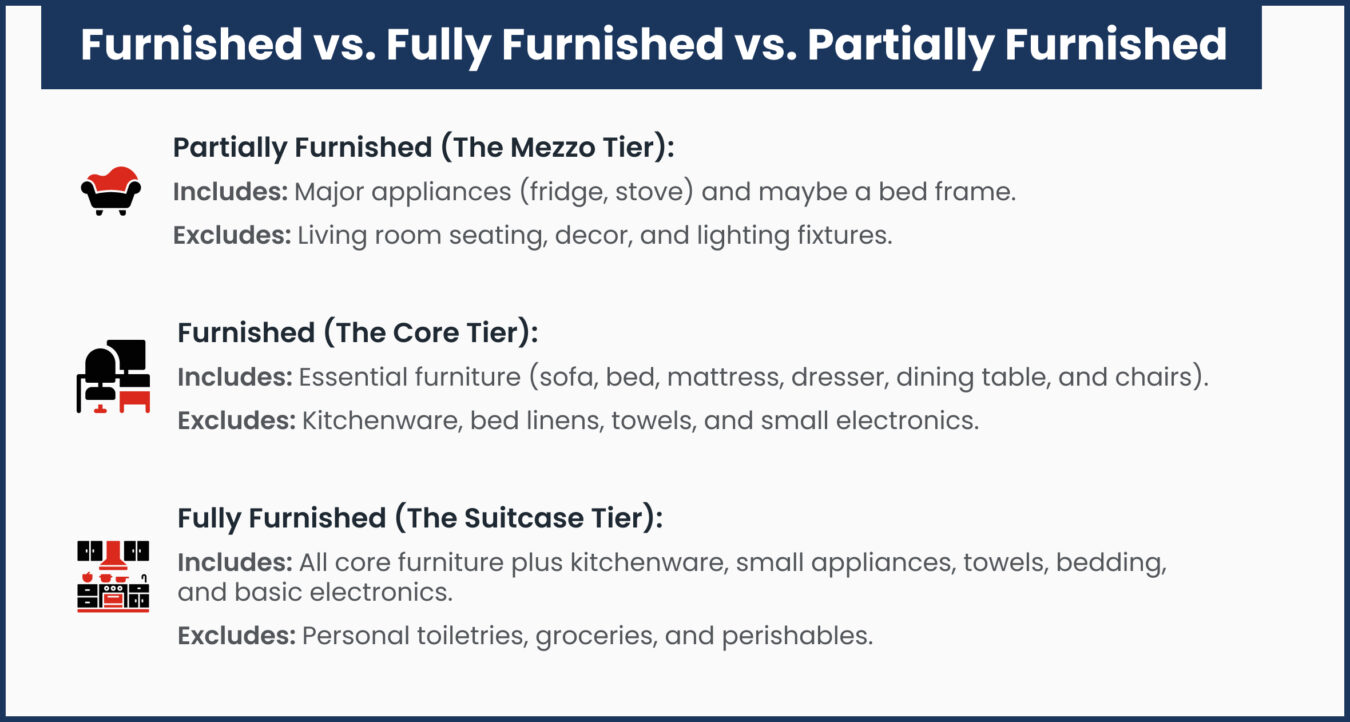
If you’re considering renting an apartment, you must know what “furnished,” “fully furnished,” and “partially furnished” apartments mean. Let’s understand their differences.
Furnished
As mentioned above, a furnished apartment includes all the basic furniture you need for your house. All the rooms of the apartment come with these essentials like a bed, a sofa, a table, and a dresser.
Fully Furnished
You might wonder, “What does fully furnished mean?” if other apartments are “furnished.” The difference lies in the extent of furnishing.
Fully furnished apartments come with all the basics that are present in furnished apartments. Along with these, they come with everything you need to start living comfortably in the apartment immediately.
These include kitchenware, linens, towels, electronics, small appliances, lamps, curtains, and sometimes even basic toiletries.
Partially Furnished
Semi-furnished, or partially furnished apartments, sit right between furnished and fully furnished apartments. These places typically provide a mix of furnishings.
For instance, you may get major appliances and a bed, but the living room might be completely unfurnished and light fixtures absent.
That’s why it’s crucial to ask for a list of all the inclusions in writing before signing your lease agreement.
What’s Typically Included in a Furnished Apartment
Most furnished apartments come with standard inclusions for all rooms of the house. These include:
- Bed and mattress
- Dresser
- Sofa
- Dining table and chairs
- Wardrobe
- Small appliances like a toaster and coffee maker
- Basic kitchen utensils
However, items such as toiletries, perishables, food, and linens are almost never included in these units. You’d have to upgrade to a fully-furnished apartment for some of those and other heavy-duty appliances and electronics.
A fully-furnished apartment is when you can truly “move in with a suitcase.” Just keep in mind that you aren’t moving into a hotel. You’ll still need to hit the grocery store for toilet paper, shampoo, and snacks on your very first night.
When Furnished is a Good Fit
Furnished apartments tend to cost much more than an unfurnished apartment. That’s why it’s essential to understand whether it’s the right choice for you (or not).
The higher rent makes sense when you don’t want to invest in buying furniture or moving and storing your existing furnishings. Here are some situations where a furnished apartment should be your go-to choice:
- Short-term stays (3-12 months)
- Business relocations
- Brief stays between leases
- New student in a city
- Sudden move
- Traveler experiencing a city
In all these situations, the premium paid for a furnished apartment is much lower than the cost of purchasing or moving furniture to an unfurnished apartment.
Furnished rentals are also a great option when you aren’t sure if you’d like to live in the neighborhood for long. Moving in with fewer belongings would make it easier to move out later.
When Unfurnished is a Better Choice
The rent savings are very obvious when you opt for an unfurnished apartment. Your rent tends to be 15-40% lower than a comparable furnished unit, making it a significant difference.
However, you’ll also have to spend money to move your furniture to the apartment or buy new furniture. While this does involve some up-front costs, you’ll be able to move apartments without ever losing equity on your pieces, which is the case with furnished apartments.
That said, you’d be an ideal unfurnished renter if you:
- Already own furniture
- Plan on staying in the apartment for the long-term (12+ months)
- Want to personalize the space
- Prefer to avoid the higher rent premium
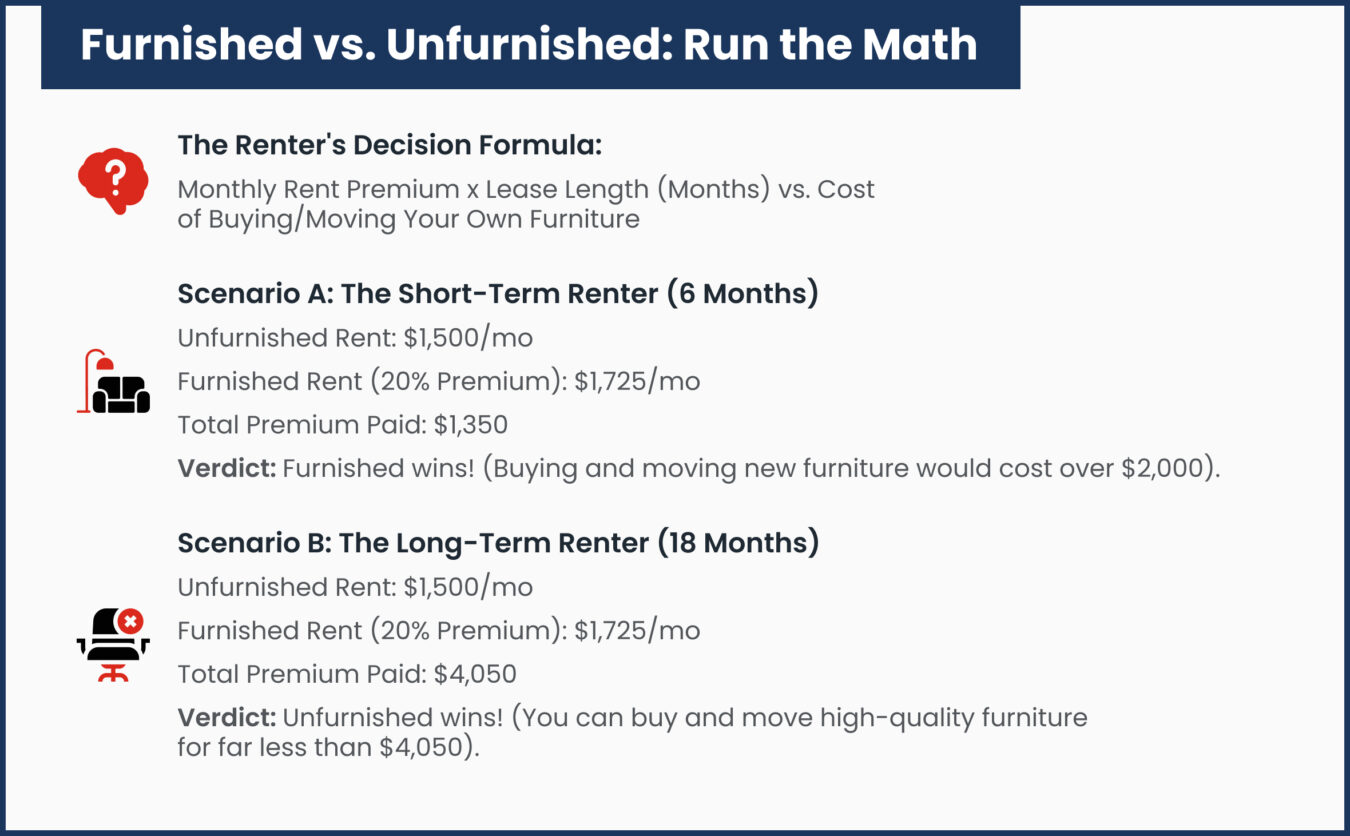
The decision comes down to simple math. You should weigh the overall cost of furnished and unfurnished apartments with the following formula:
Rent premium x lease length vs. cost of buying the furniture
If it’s cheaper to furnish your apartment, you’re better off choosing an unfurnished unit.
How Much More Does a Furnished Apartment Cost?
As mentioned earlier, furnished apartments charge a premium for the furniture and its maintenance over the actual rent of the unfurnished apartment. Typically, this premium ranges between 15-30% over the rent of a similar unfurnished unit in the same building.
If the apartment comes with luxury furniture or includes some costly appliances and electronics, the premium could go above 40% as well.
But furniture alone doesn’t determine the premium.
The rental duration matters too. Short-term furnished rentals (such as 3-to-6-month leases) carry the highest premiums because turnover costs for landlords are much higher.
Additionally, landlords could choose to include utilities and internet in the furnished bundle. Their monthly costs could also raise rents.
When shopping around, always calculate the all-in monthly cost by factoring in setup fees, separate utility bills, and the cost of buying your own furniture to see which option truly makes the most financial sense for your situation.
What to Inspect During a Furnished Apartment Tour
If you choose to go ahead with a furnished apartment, make sure you conduct a walkthrough before signing the lease. It can help you avoid disagreements and deductions from your security deposit at a later stage.
Start by thoroughly inspecting the furniture. Look for existing stains, mattress condition, structural integrity of sofas and beds, chips, discoloration, and more.
Beyond the furniture, check the age and functionality of big appliances and electronics. Verify whether they work without issues. Also, if included, check for an adequate supply of kitchen basics and linens.
To protect yourself, ask the landlord for the official move-in inventory list before signing the lease.
This allows you to dispute or log any missing or damaged items and areas of the apartment ahead of time.
Because some landlords will charge full replacement costs if items are damaged during your stay, it’s vital to get all replacement terms and wear-and-tear policies in writing.
Furnished Apartment Lease Terms to Watch For
Furnished apartments can make moving in and out a breeze. But before signing a lease agreement, watch for unique clauses specific to furniture.
Pay close attention to rules regarding damage liability for furniture, potential restocking fees for missing items, and explicit restrictions on moving or rearranging the landlord’s furniture.
Many contracts also require professional cleaning fees at move-out to restore the items to their original state.
Security deposits for furnished apartments tend to be much higher (up to 1.5-2x than unfurnished units) to cover the valuables. Landlords can deduct fees from this amount for any damage or cleaning.
To safeguard your money, document the condition of every single furnished item with clear, timestamped photos and videos on move-in day.
Finally, keep in mind that subletting a furnished apartment is often completely disallowed or highly restricted, as property owners want to know exactly who is using their belongings.
Find Furnished Apartments on Rentler
Furnished apartments make renting as easy as moving in with your bags. The hassle of shifting and arranging furniture is reduced to a great extent.
However, it’s important to keep the higher rents, furniture condition, and your usage in mind before signing the lease.
And if you’re looking for furnished apartments or want to find a tenant for your apartment, sign up on Rentler now.
Frequently Asked Questions About Furnished Apartments
What does fully furnished mean?
A fully furnished apartment includes all the basic furnishings, plus all the other essentials a tenant needs to live comfortably. It’s a move-in-ready setup with things like a couch, dresser, mattress, and more.
What is a furnished apartment?
A furnished apartment includes basic furniture like sofas, beds, a dining table and chairs, and mattress.
Are furnished apartments more expensive?
Yes, furnished apartments tend to cost more than comparable unfurnished apartments. Rents include a premium of about 15-30% on furniture. Higher security deposits and short-term leases can push the overall expenses higher.
Do furnished apartments include kitchen items?
Yes, many furnished apartments offer basic kitchen items like utensils, pots, and pans. Landlords may also include small appliances, such as toasters. Verify the inventory list before signing the lease.
Can I bring my own furniture into a furnished apartment?
Furnished apartments leave limited space for your own furniture. Also, many leases prohibit moving the landlord’s items. This means you can bring a few small items, but if you want to bring larger pieces, ask the landlord to remove certain items before signing the lease.
How long can I rent a furnished apartment?
You can rent a furnished apartment for almost any duration, from a few weeks to several years. They are most commonly offered on short-term leases, such as 3, 6, or 9 months, catering to corporate travelers, students, and temporary residents. Long-term annual leases are also available, but less common.