
What is a Loft? All About Loft Living, Design, and Costs
You may have come across loft apartments when scrolling through rental listings and wondered what makes them different from a normal apartment. The difference lies in how they’re constructed and their history. So, what is a loft? And how is it different? This article answers everything you need to know about them, including pros and

Nadiia
10 min read
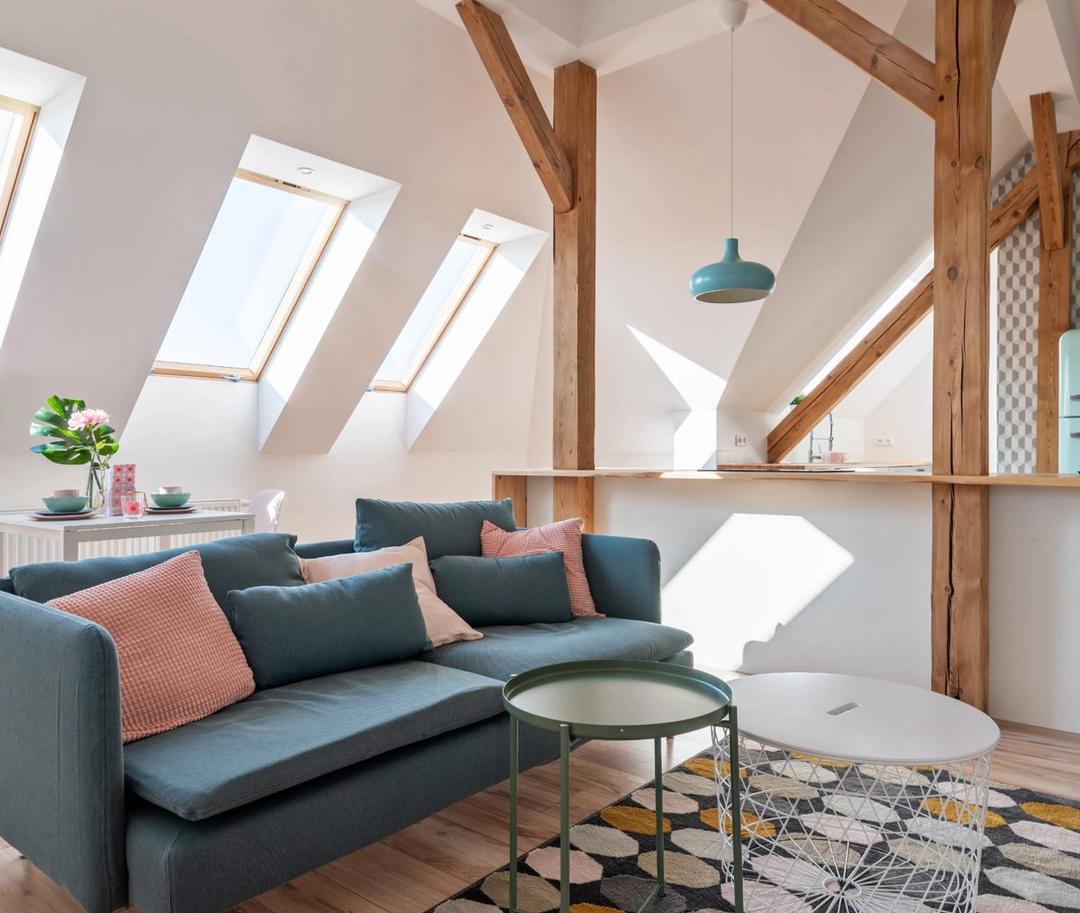
You may have come across loft apartments when scrolling through rental listings and wondered what makes them different from a normal apartment.
The difference lies in how they’re constructed and their history.
So, what is a loft? And how is it different? This article answers everything you need to know about them, including pros and cons.
Loft Definition and Core Meaning
A loft is an apartment with a large, open living space, similar to a studio but significantly larger. While studios typically span 400-700 sq ft, lofts range from 1,000-2,000 sq ft and are distinguished by high ceilings and oversized windows.
Traditionally, the term “loft” referred to an attic or converted industrial spaces like factories and warehouses. This industrial heritage remains central to their design. Today, however, many loft-style apartments are modern, luxury new builds designed as full-scale, functional units.
It’s important to distinguish these loft apartments from “loft spaces,” which are small mezzanine levels within standard apartments.
Ultimately, a loft’s specific design, style, and aesthetic depend on its location, the developer, and the era in which it was built.
The History Behind Loft Apartments
The origin of lofts can be traced to the 19th century in cities like New York and Paris. Artists in Paris chose empty factories for their high ceilings to accommodate large canvases.
Likewise, New York was left with numerous vacant warehouses after WWII. Artists began moving into these abandoned warehouses in the mid-20th century in areas like SoHo and Tribeca, using them as studios.
This low-cost artist housing started gaining traction due to its architectural features. From the 1980s to the 2000s, lofts were commercialized as luxury and trendy living spaces.
Eventually, they became popular globally, and developers started building loft-style apartments to meet the soaring demand. Today, these apartments are seen as luxurious spaces that pave the way for design-forward living.
Key Characteristics of a Loft Apartment
Most loft apartments share a few basic design similarities. Here are the features you should look for:
- Open-concept: These apartments have little to no interior walls. Living, sleeping, and working all happen in a single space.
- High ceilings: They tend to have 10-20 feet high ceilings, creating vertical space and a sense of openness.
- Large windows: Floor-to-ceiling windows flood the vast space with natural light.
- Industrial design: You can find exposed brick, beams, ductwork, and concrete floors that give a sense of industrial aesthetics.
- Fluid Functionality: A highly flexible layout where furniture placement, rugs, and lighting define functional zones instead of traditional drywall.
- Distinct Challenges: Limited built-in storage (minimal closets) and unique acoustic challenges, as hard surfaces and open spaces tend to amplify sound travel and echoes.
If the loft is a converted factory, you may find unique architectural details tied to the building’s history, such as columns and steel framing. New loft apartments try to mimic these characteristics.
Types of Lofts (Hard vs. Soft Lofts)
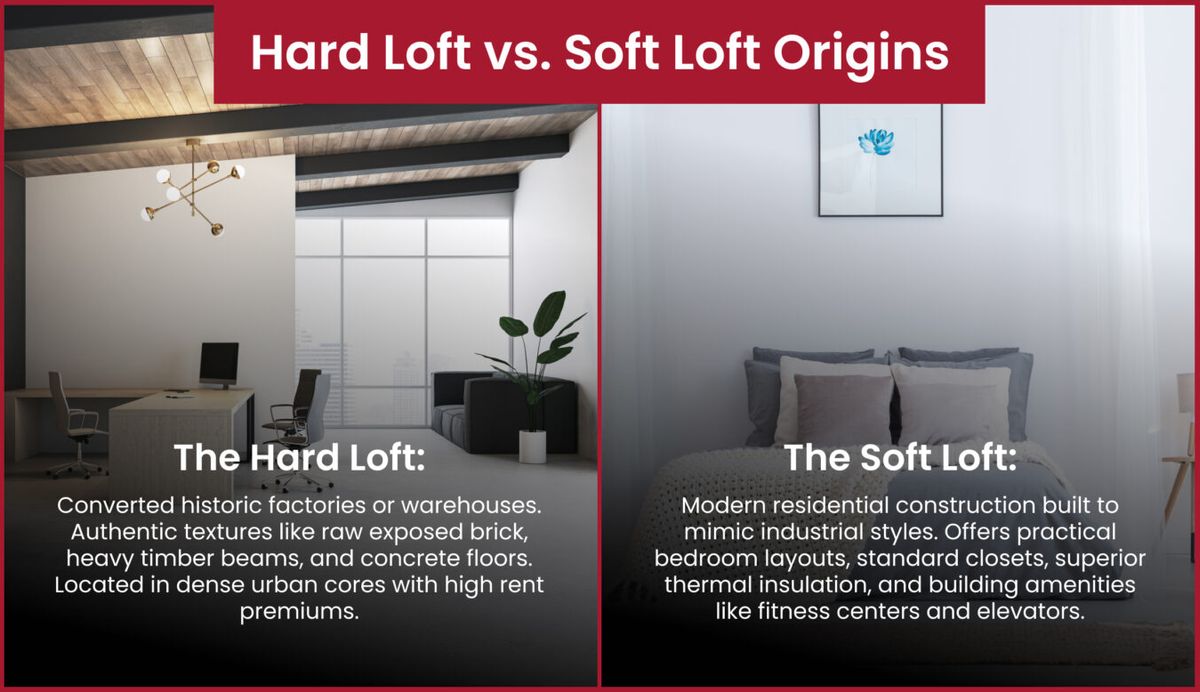
Loft apartments can largely be classified into two buckets: hard and soft. The names signify the apartment’s origins.
Hard Lofts
These are the real deal. They’re the original industrial buildings and warehouses that were converted into residential spaces. You get the authentic old-world charm with exposed brick, original wood, hard concrete floors, and pipes.
Their layouts tend to be irregular as the lofts were converted into residences and weren’t purpose-built for living.
As hard lofts are old, they tend to be located in historic or core urban districts. Moreover, they are in limited supply, making them costlier due to higher demand.
Soft Lofts
These loft apartments are newer constructions that have been specifically designed to replicate older loft aesthetics. They’re usually situated in suburban or newly developed urban areas.
As these units are planned and built, they include modern amenities like insulation, gyms, elevators, and HVAC. And while the loft is designed as an open space, it has more practical layouts for bedrooms and storage.
These apartments are relatively more common, and you could consider them if you want the old-world charm with modern amenities.
Loft vs. Other Apartment Types
Understanding the difference between a loft, studio, and traditional apartment can help you find the perfect house for you.
Loft vs. Studio
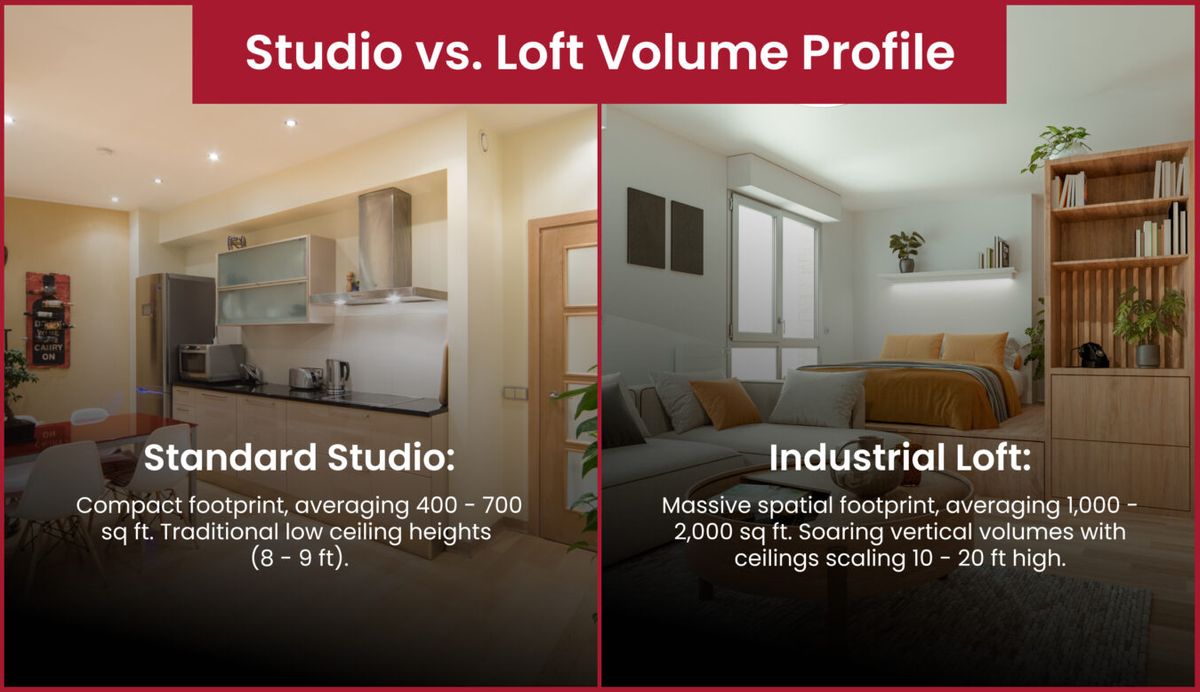
Studios and lofts both share open layouts without walls. However, studios are much more compact (400-700 sq ft) and purpose-built for residential use.
Lofts are larger (1000-2000 sq ft), have higher ceilings, and originated from industrial use. Even newer lofts retain those industrial textures.
Loft vs. Traditional Apartment
Traditional apartments and lofts have similar square footage, but while lofts are spread out vertically, traditional apartments are horizontal. Additionally, lofts are open and flexible, giving you the chance to add character to the space.
On the contrary, traditional apartments are rigid with segmented rooms and many walls. Lofts lack acoustic and visual privacy compared to traditional apartments.
Loft vs. Apartment with Loft Space
While a loft is known for being open and having vertical space, a loft-style apartment uses that concept in a smaller part of the house. For instance, it could feature an elevated sleeping platform, while the other areas of the apartment would have a traditional design.
Pros and Cons of Living in a Loft
Before renting or buying a loft, it’s important to consider its pros and cons. Let’s take a look at them.
Advantages
- Open space and lighting: Lofts provide expansive, sunlit areas with soaring ceilings and oversized windows. Their open layouts encourage creative freedom in arrangement and design.
- Aesthetic: Lofts feature an industrial style, giving them a unique architectural character. It makes them more stylish than traditional apartments.
- Flexibility: The lack of walls allows different layouts to define work and living areas. You don’t have to work within the confines of rooms.
- Location: Older lofts are usually located centrally in downtown or cultural districts, making them more accessible.
- Space: You get ample square footage, giving you more living space than other apartments.
Disadvantages
- Energy costs: Heating and cooling costs are higher due to ceiling height, large windows, and insulation issues. This is especially true for hard lofts, as they weren’t built for living.
- Limited privacy: Lofts lack walls, which reduces privacy, making them a difficult choice for families.
- Acoustics: The high ceiling and open space cause sounds to echo throughout the space.
- Storage: Lofts have limited storage space, especially hard lofts. You would have to work out creative space management solutions for storing your belongings.
- Difficulty furnishing: The high ceilings and vast open space make it challenging to furnish and decorate the loft.
- Lack of amenities: Hard lofts in older buildings may lack amenities like elevators and parking. This, however, isn’t the case with most soft lofts.
How Much Do Loft Apartments Cost?
Loft apartments tend to be costlier than studios and traditional apartments owing to their sheer size and demand-supply gap.
That said, the cost of renting or purchasing a loft depends heavily on the city, size, and building type.
In a mid-sized city, you may have to pay between $1500 to $3000 per month as a tenant. But this amount can go up to $8000+ in major cities, depending on location and size.
And if you’re looking to buy a loft, entry-level lofts can cost $300K to $800K in smaller markets. But in cities like New York City, premium units can cost well over $1-$10 million.
Hard lofts are typically priced higher, and those that are located downtown cost more.
Additionally, there are hidden costs to owning or renting lofts, such as higher utility bills and the need to buy custom furniture and storage solutions.
Before choosing a loft, weigh your lifestyle value against the cost premium you pay for the apartment.
How to Design and Decorate a Loft
Decorating a loft isn’t straightforward, as it’s an open canvas with limited storage space. Here are some tactics you can use:
- Use furniture like sofas, shelves, and rugs to define separate living zones.
- Use vertical storage solutions like shelves to maximize storage space.
- To reduce echo, use carpets and area rugs. Also, consider glass or wood partitions as visual dividers.
- Use soft textures to balance the rawness of the industrial elements. Also, add elements like mirrors to the walls and hanging lights on the ceiling to fill the vertical space.
- Consider using neutral or bold accents for furnishings and other decor to add character to the space.
- Choose thick curtains and insulation to reduce energy loss.
For example, you can keep an open living room and workspace, but use shelves or partitions to separate the bedroom area.
The vastness of lofts can make it seem essential to fill up the space with furniture and other items. You should avoid this common mistake by embracing openness instead.
Is Loft Living Right for You?
Lofts are in high demand and can be a great option for many. But is it right for you?
Typically, these apartments are best suited for singles or couples who don’t need multiple private rooms. The openness of the space and the ability to add character to it also make them ideal for artists, designers, and remote workers.
However, they may not be a good choice for families, as they require multiple bedrooms. If you need significant storage, you’re better off in a traditional apartment. Finally, if you’re sensitive to noise and temperature fluctuations, lofts aren’t a great option.
Ask yourself these three questions before taking the leap:
- Do you need defined rooms?
- Are you comfortable with higher utility costs?
- Do you value style over practicality?
Choosing a loft is a lifestyle choice, not just a financial one. A remote freelancer thrives in its fluid, light-filled, live-work space.
However, a multi-person family will struggle with the lack of walls. You should choose lofts only if they blend into your lifestyle.
Choose Your Home with Rentler
Loft apartments can be a fantastic choice if they tick all the right boxes for you. It’s a space where you can truly express yourself.
But irrespective of your choice, whether it’s a loft, studio, or traditional apartment, you can find it all on Rentler. Sign up now and start searching for your dream home.
FAQs About Loft Apartments
What is a loft and how is it different from an apartment?
A loft is a vast, open-concept home converted from historic industrial buildings or inspired by them. It features high ceilings, industrial design, and no interior walls. In contrast, traditional apartments are purpose-built residential spaces with structured layouts, using drywall and closed doors to separate bedrooms for privacy.
What is a loft apartment vs. a studio apartment?
A studio is a compact apartment without walls, much like a loft apartment. However, studios are much smaller in comparison. Also, lofts feature high ceilings and massive windows, and aren’t purpose-built for residential use (only the newer ones are).
Why are loft apartments usually more expensive?
Lofts are huge apartments (1000-2000 sq ft) and have immense vertical volume. Also, they’re located in prime locations and command premiums due to their uniqueness and historical value. Higher heating and cooling costs also make them costlier than other apartments.
Are lofts good for families or roommates?
Lofts don’t have walls, which raises privacy concerns. They also lack storage space. Both these factors make it difficult for families or roommates to live there. High ceilings also cause echoes. A toddler’s toys or a roommate’s late-night call will echo across the entire unit.
What is the difference between a hard loft and a soft loft?
Hard lofts are authentic conversions of old factories or warehouses, featuring original industrial elements like brick and beams. Conversely, soft lofts are new residential constructions that replicate this aesthetic while providing modern amenities and superior insulation.
Can a loft also mean an attic space?
Yes. Traditionally, a loft means the attic space just under the roof of a house. This loft is usually used as an additional bedroom or storage area.
Share this article
More articles
 Tenants
How to Rent an Apartment: Total Step-by-Step Guide
Figuring out how to rent an apartment or house for the first time can be an exciting and overwhelming experience. To make the process as easy as possible, it’s important to be prepared and to know what to expect. Getting Started: Renting an Apartment for the First Time Renting your first place is a major
Anna L.
 Tenants
What Do Apartments Look For in Background Checks?
If you’re currently apartment hunting, you know it’s common to send multiple applications before finding the right apartment and moving in. With each application, you also generally submit a background check and pay an application fee at some point. But what do apartments look for in background checks? And why do they need to do
Nadiia
 Tenants
Locked Out of Your Apartment? Here’s What to Do
Getting locked out of apartment buildings is scary, especially late at night. Panic is a common response, but it usually doesn’t help the situation, and it can make it more difficult to think clearly. In this guide from Rentler, you’ll find step-by-step instructions for if you’re locked out of the house: what to do, who
Nadiia