
What Is a Security Deposit? A Guide to Rental Fees
TL;DR: What is a security deposit? It is a refundable payment, typically equal to one to two months of rent, that tenants pay at lease signing to protect the landlord against damages or unpaid rent. Most states cap this amount and require landlords to return it within 14 to 60 days after move-out. Tenants can

Nadiia
11 min read

TL;DR:
What is a security deposit? It is a refundable payment, typically equal to one to two months of rent, that tenants pay at lease signing to protect the landlord against damages or unpaid rent. Most states cap this amount and require landlords to return it within 14 to 60 days after move-out. Tenants can maximize their refund by documenting the unit’s condition at move-in and cleaning thoroughly at move-out.
Moving into a new place is exciting—right up until you start reading the lease paperwork. Between first month’s rent, pet fees, and moving expenses, those upfront costs add up fast. One of the biggest line items? The security deposit.
So, what is a security deposit, and why do you have to pay it? This guide breaks down the costs, the rules, and the steps to get your money back when your lease ends. We will walk through how much you should expect to pay and what landlords can and cannot deduct. You’ll also find practical tips for walking away with the full amount at move-out. But first, let’s start with the basics.
Security Deposit Definition
A security deposit is a refundable sum of money a tenant pays the landlord—usually at lease signing—as financial protection against property damage or unpaid rent. While the security deposit definition is straightforward, renters often confuse this payment with other move-in costs. It is entirely separate from your first and last month’s rent.
A security deposit is also different from pet deposits, move-in fees, and rental application fees. Those charges are often nonrefundable and serve entirely different purposes. You might also hear your property manager call this payment a rental deposit—just a common synonym.
Here is the encouraging part: most deposits are returned in full when the tenant leaves the unit in good condition and has paid all rent owed. The next question most renters have is how much they should expect to pay.
How Much Is a Security Deposit Usually?
How much is a security deposit usually? In most cases, landlords charge one to two months of rent.
State laws play a major role in setting these limits. California, Massachusetts, and New York all cap the amount at one month of rent for most landlords. Texas, on the other hand, has no statutory cap at all. Your credit and rental history can also affect the final number. A landlord might charge a higher deposit—within legal limits—for tenants with lower credit scores, limited rental history, or past evictions.
Getting familiar with the rental application process early helps you budget for these costs before they catch you off guard. Once you have paid the deposit, the good news is that the money is meant to come back to you.
Is a Security Deposit Refundable?
Yes. A security deposit is refundable by law. Your landlord can only make deductions for specific reasons—primarily, unpaid rent and damage beyond normal wear and tear.
Do you know what counts as normal wear and tear? Take fading paint, minor carpet wear from regular foot traffic, and small nail holes from hanging pictures. These are the expected results of everyday living, and that’s why no one can charge you for them. But there’s also deductible damage that includes broken fixtures, large carpet stains, holes that need patching, or unauthorized paint colors.
Some leases include non-refundable move-in fees or pet fees—but those are completely separate charges. If you see “non-refundable” next to a line item, that’s not your security deposit. It’s crucial to understand what counts as damage and what counts as normal wear, as it directly affects how much of your deposit comes back.
What Can a Landlord Deduct from Your Deposit?
Knowing what a security deposit covers helps you avoid surprise charges at move-out. Landlords can legally deduct money for a few specific reasons:
- Unpaid rent: Any balance owed at move-out, including rent for notice periods not honored.
- Damage beyond normal wear and tear: Broken windows, large wall holes, pet damage, burns, and water damage caused by tenant negligence.
- Cleaning costs: Only if the unit is left significantly dirtier than when you moved in—not for routine turnover cleaning.
- Unpaid utilities: If you were responsible for utilities per the lease and left a balance behind.
What landlords cannot deduct for: normal wear and tear, pre-existing damage that was there before you moved in, or capital improvements like upgrading countertops or replacing old appliances. Understanding who pays for rental property damage ensures you are not footing the bill for something that is not your responsibility.
Document the unit’s condition at move-in with timestamped photos and a written checklist. Most states also require the landlord to provide an itemized deduction statement when they return what is left of the deposit. Knowing what can be deducted is half the equation—the other half is knowing when and how the money comes back.
Getting Your Security Deposit Back
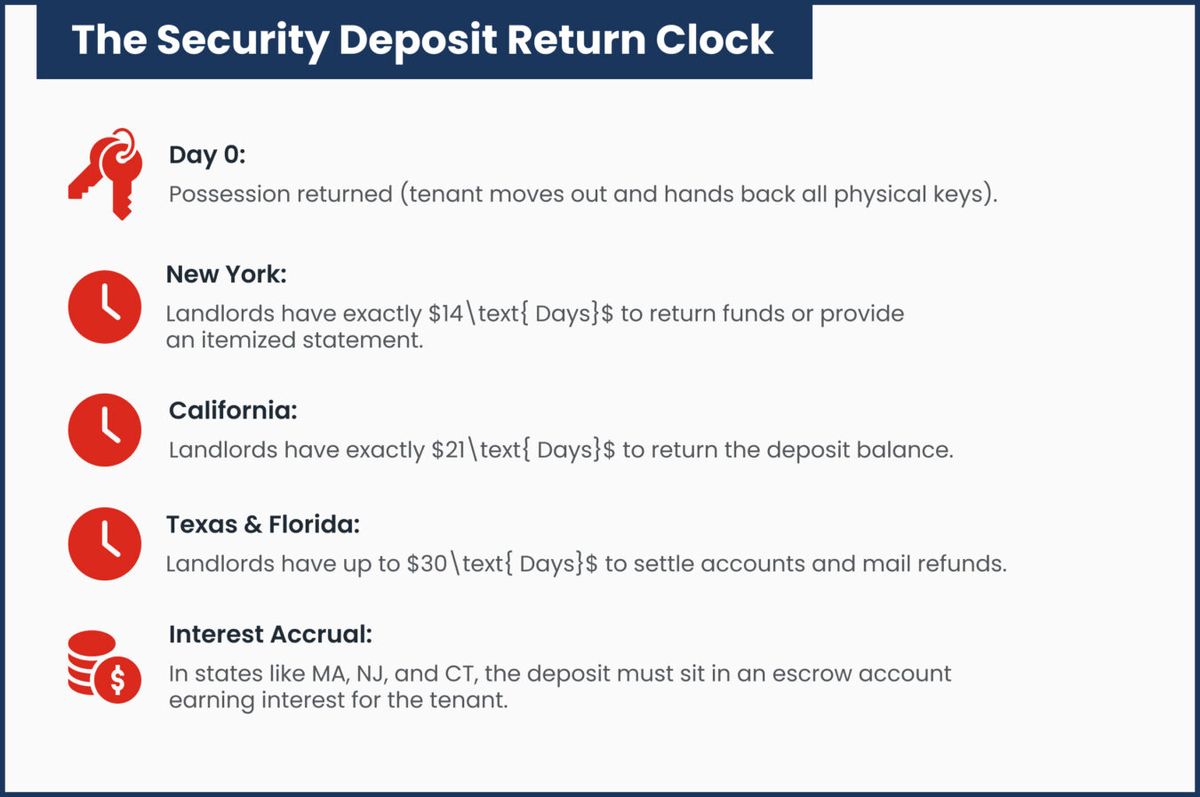
Landlords must return the deposit, minus any itemized deductions, within a state-mandated deadline. That window typically falls between 14 and 60 days after move-out.
Here are a few examples. California requires the return within 21 days. New York gives landlords just 14 days. Texas allows 30 days. Florida splits the difference—15 days if there are no deductions, or 30 days if the landlord is making a claim. One important detail: the clock starts when you hand over your keys and return possession of the unit, not the date your lease officially ends.
Some states go a step further. Massachusetts, New Jersey, and Connecticut require landlords to hold deposits in interest-bearing accounts and pay the tenant any accrued interest. This means that you’ll receive interest on your security deposit as long as it keeps sitting in the landlord’s account.
Always provide a forwarding address in writing so your rental deposit does not get lost in transit. The timeline gives you the “when.” Here is how to make sure you get the full amount.
How to Get the Full Security Deposit Back
Getting every dollar back starts on the day you take possession. Do a thorough walkthrough. Take timestamped photos of every room, every wall, every appliance. Sign a condition report. Industry research shows that roughly 75% of renters who documented their move-in conditions received at least some of their deposit back—and those who combined photos with a written checklist had even better results.
When moving out, follow a strict cleaning checklist:
- Deep clean: Scrub the kitchen, bathrooms, floors, appliances, and baseboards until they shine.
- Patch and repair: Fill small nail holes and touch up paint, but only if your lease allows it.
- Replace and return: Swap out burned-out light bulbs and return all keys, fobs, and parking permits.
Schedule a pre-move-out walkthrough with your landlord if possible. It gives you a chance to address concerns before the final inspection—and potentially avoid deductions you could have prevented. After cleaning, take timestamped photos and video of every room as a final record.
Good habits start early. The same care you put into applying for a property online and reviewing your lease terms should carry all the way through to move-out day. Your deposit is real money. Treat it that way. But what happens if you have done everything right and your landlord still holds back your funds?
What to Do If Your Landlord Won’t Return Your Deposit
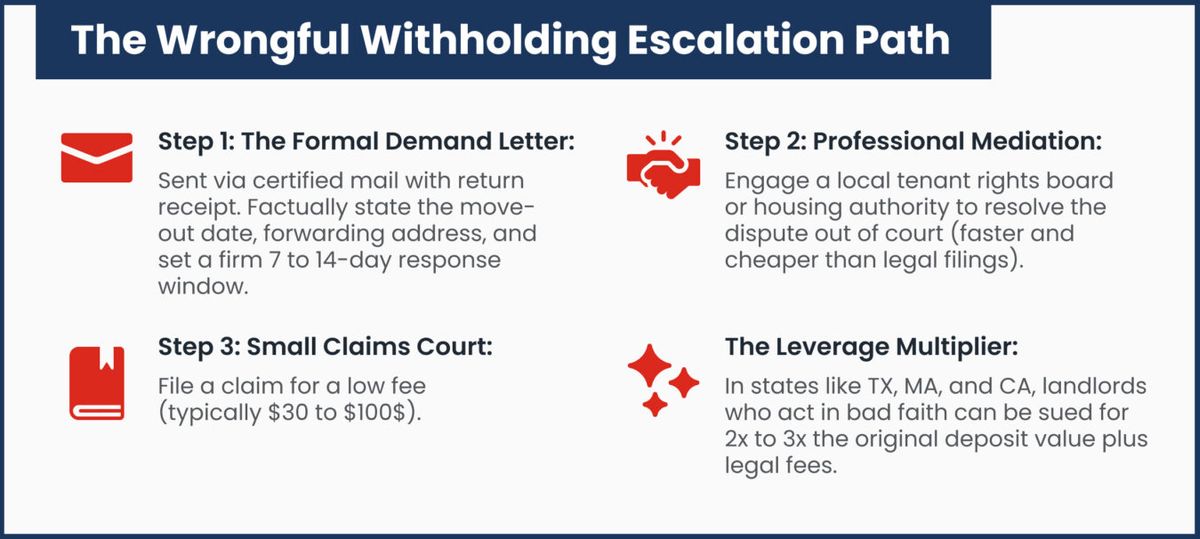
If your landlord withholds your money without a valid reason, do not just let it go. Follow this escalation path:
- Send a written demand letter. Mail a formal letter—certified, with a return receipt—citing the state statute, your move-out date, the amount owed, and a firm deadline to respond. Seven to 14 days is standard.
- Try mediation. If the landlord ignores your letter, contact a local tenant rights organization or housing authority about mediation. This step is faster and cheaper than court fees.
- File in small claims court. If mediation does not resolve it, file a claim. Filing fees are low—usually between $30 and $100—and most states do not require an attorney.
Many states also penalize landlords who withhold deposits without legal basis. Texas allows tenants to recover three times the deposit plus $100 and attorney fees. Massachusetts awards triple damages with interest. California allows up to twice the amount wrongfully kept. These penalties exist for a reason: they give tenants real leverage.
Document every piece of communication in writing from the very start—emails, texts, certified mail receipts. A clear paper trail can make or break your case. For renters who find the upfront cost of a traditional deposit hard to manage, there are newer options worth considering.
Security Deposit Alternatives
Some landlords and property management companies now offer alternatives to the traditional lump-sum deposit. Programs like Rhino and Obligo let tenants pay a small monthly premium instead of handing over a large sum at move-in. For anyone transitioning into apartment life on a tight budget, these programs can make the first month far less stressful.
Here is the tradeoff, though. Those monthly premiums are non-refundable. You will not see that money again at the end of your lease. Over a long tenancy, the cumulative premiums can easily exceed the amount of a traditional deposit you would have eventually gotten back.
Not every building offers these options. Availability depends entirely on the property management company and the local market. Before signing up, calculate the total cost of premiums over your expected lease term and compare it to a traditional deposit. The math might surprise you. No matter which route you choose, knowing your state’s specific rules is the best way to protect yourself.
State Laws and Tenant Rights
Understanding what a security deposit is also means understanding the laws that protect you. Most states offer a core set of tenant protections: deposit caps that limit how much a landlord can collect, escrow or interest-bearing account requirements, mandatory itemized deduction statements at move-out, return deadlines between 14 and 60 days, and penalty damages if the landlord violates any of these rules.
Look up your state’s specific landlord-tenant statute before you sign a lease. Cities and counties can add even stricter protections on top of state law, so local rules matter too.
One more thing worth checking: make sure your lease terms actually match what state law requires. A lease cannot waive tenant protections established by statute. If your lease says your landlord has 90 days to return the deposit, but state law says 30, state law wins.
Your security deposit can represent a month’s rent or more—that is real money. Understanding the process is the best way to make sure it comes back to you. Rentler makes the rental process easier for everyone, from searching for your next home to paying rent online. Landlords can also benefit from free property management software to manage deposits and payments in one place.
Still have questions? Here are answers to the most common ones.
Frequently Asked Questions
What is a security deposit for rent?
A security deposit for rent is a refundable payment a tenant makes before moving into a rental to protect the landlord against unpaid rent or property damage. The landlord holds it during the lease and returns it—minus any lawful deductions—after the tenant moves out and the unit has been inspected.
How much should I expect to pay as a security deposit?
Most tenants pay one to two months of rent, depending on state law and the landlord’s policies. States like New York and Massachusetts cap the amount at one month. Others, like Texas, have no statutory limit. Your credit history and rental background may also factor into the final number.
Is a security deposit refundable?
Yes, security deposits are fully refundable by law. Landlords may only deduct for specific reasons—unpaid rent, damage beyond normal wear and tear, or excessive cleaning costs. Any remaining balance must be returned within the state’s legal deadline, along with an itemized list of any deductions.
Can my landlord keep my whole deposit for cleaning?
Generally, no. A landlord can only deduct cleaning costs if the unit was left in significantly worse condition than when you moved in. Routine turnover cleaning is the landlord’s responsibility. All cleaning deductions must be itemized, and charges for normal wear and tear are not allowed.
Do I get interest on my security deposit?
In some states, yes. Massachusetts, New Jersey, Connecticut, and New York (for buildings with six or more units) require landlords to hold deposits in interest-bearing accounts and pay the tenant accrued interest. Check your state’s specific rules—you might be owed more than you think.
What if I can’t afford a security deposit up front?
Some landlords offer alternatives such as monthly premium programs or installment payment plans. A few states and cities even require landlords to allow tenants to pay the deposit in installments. Local housing assistance programs and community grants may also help cover upfront moving costs.
Share this article
More articles
 Tenants
How to Rent an Apartment: Total Step-by-Step Guide
Figuring out how to rent an apartment or house for the first time can be an exciting and overwhelming experience. To make the process as easy as possible, it’s important to be prepared and to know what to expect. Getting Started: Renting an Apartment for the First Time Renting your first place is a major
Anna L.
 Tenants
What Do Apartments Look For in Background Checks?
If you’re currently apartment hunting, you know it’s common to send multiple applications before finding the right apartment and moving in. With each application, you also generally submit a background check and pay an application fee at some point. But what do apartments look for in background checks? And why do they need to do
Nadiia
 Tenants
Locked Out of Your Apartment? Here’s What to Do
Getting locked out of apartment buildings is scary, especially late at night. Panic is a common response, but it usually doesn’t help the situation, and it can make it more difficult to think clearly. In this guide from Rentler, you’ll find step-by-step instructions for if you’re locked out of the house: what to do, who
Nadiia