

You’re looking for your next apartment or house to rent. But you’re done dealing with property management companies. Instead, you want to find private landlords who will be more personally invested in leasing their properties.
But if you don’t know how to find private landlords or where to start, we’ve got you covered. Here’s the process you should follow to find them.
Why Renters Look for Private Landlords
Private landlords manage their own properties, including the leasing process. Renters tend to prefer private landlords as they’ll have a more personal relationship with them.
As the landlord leases the property directly, they’ll likely have more flexible screening criteria and could make decisions on a case-by-case basis.
Many tenants also search for private landlords as they may have imperfect credit scores, recent evictions, or irregular incomes. Connecting directly with the landlord increases their chances of getting the property.
There are several ways to find these landlords, which we’ll cover in this article. But first, let’s understand what a private landlord is.
What’s the Difference Between a Private Landlord and a Property Manager?
A private landlord is an individual or a small LLC that owns less than 5 properties. This is in stark contrast to property managers who usually oversee multiple properties from different landlords simultaneously.
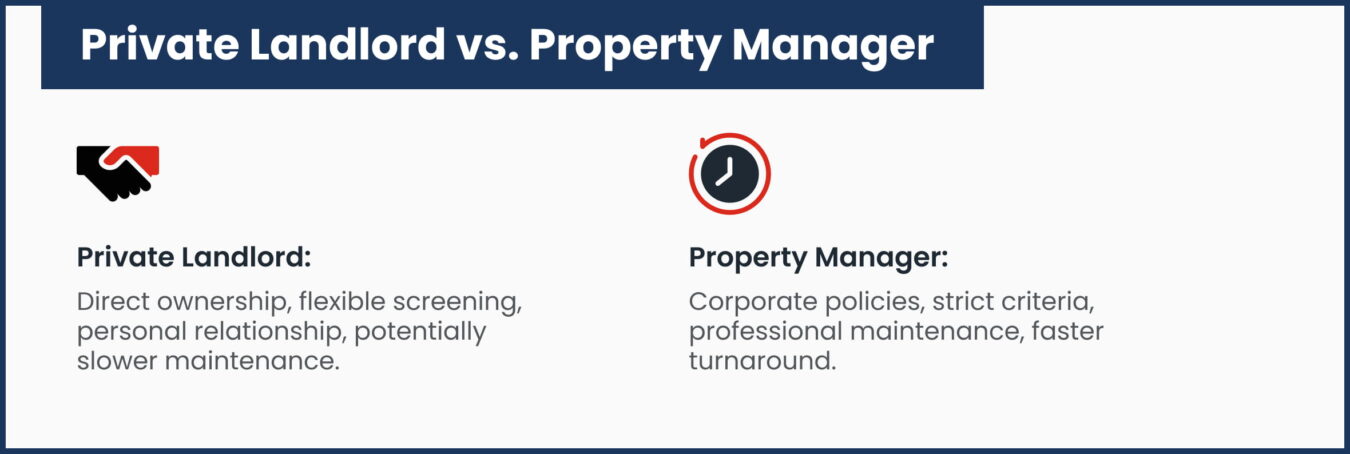
Here are some core differences between the two:
Private Landlord
They typically own the properties and oversee their rentals themselves. From showings and lease agreements to rent collection and maintenance, they handle everything.
As a result, you deal directly with the landlord. This provides greater flexibility as they tend to consider tenants on a case-by-case basis.
However, there are some trade-offs. Private landlords can take longer to fix things and may not have 24/7 maintenance lines. This could spoil your rental experience.
Property Manager
They don’t own the property but instead work for the landlord or a large property management company. As a result, they follow strict corporate policies. This leaves very little wiggle room compared to private landlords.
Also, when you connect with a property manager, you’ll rarely get to talk with the landlord.
That said, as property managers dedicatedly work for leasing properties, you’ll get superior services. These include faster responses to maintenance requests and a straightforward leasing process.
Let’s now look at the different strategies you can apply to find private landlords.
Rentler’s For-Rent-By-Owner Filter
Using Rentler is one of the simplest ways of finding private landlords. When you search for properties on Rentler, you can filter them with the “For-Rent-By-Owner” filter.
All you have to do is click the filter, and Rentler will do the heavy lifting, showing only properties listed by private landlords.
But filtering and finding private landlords isn’t the only advantage here. You can usually message owners directly through Rentler. This makes it easy to start connecting with them for the lease. You can also start the application process online.
So, if you’re looking for private landlords, consider using this filter on Rentler as the first step.
Zillow, Craigslist, and Facebook Marketplace
If you couldn’t find a private landlord through Rentler, you can also try other popular property listing websites like Zillow. This platform comes with a built-in “owner” filter, much like Rentler.
Using this filter, you can easily find properties listed by private landlords.
Alternatively, you can use Craigslist. Private landlords tend to be heavily featured on this online classified site. Many also post their rental listings on Facebook Marketplace.
However, you need to tread with caution on both of these channels. Scams are more common on these websites compared to vetted platforms.
If you do decide to go ahead with a listing, be sure to meet in person, verify the ownership before paying, and remain wary of listings with extremely low prices.
A good idea would be to cross-check ownership against county property records. Proceed only if everything matches up.
Drive-by Method: Find Signs and Local Listings
Apart from online methods, you can also try the old-school approach of searching listings manually. You can drive or walk in the neighborhood you want to live in and look for “For Rent” signs on lawns or buildings.
Many of these signs come from private landlords, as larger property management companies tend to use other channels to attract tenants.
When you come across a “For Rent” board, take images of the phone numbers and follow up with the landlords promptly. Being quick can help you get ahead of others.
This method tends to work best in single-family-rental-heavy neighborhoods. If you’re planning to use it while searching for apartments downtown, you might find little success.
Search “For Rent By Owner” Keywords Directly
Another helpful strategy for finding private landlords is to use the keyword “For rent by owner” directly in search engines like Google. Pair this keyword up with your target city or neighborhood to bring up search results that might feature private owner house rentals.
Here are some handy Google searches you can try:
- For rent by owner [your city name]
- Private rentals in [your neighborhood name]
- Private landlord houses near me
- For rent by landlord properties near me
- Houses for rent by private owner in [your city/neighborhood]
Using these search terms will bring up a list of local, classified, and neighborhood websites. You can browse listings on these platforms and reach out to the landlords.
Likewise, you can use Bing search and Google Maps to find properties using similar keywords. The idea is to cast a wide net to increase the chances of finding a private landlord.
Ask Your Network
Sometimes, all it takes is asking around. Your network can be a great channel to find private owner rentals. Some of the networks you can tap into include:
- Friends and family
- Coworkers
- Neighborhood Facebook/WhatsApp groups
- Nextdoor
- Alumni networks
- Religious or community groups
If someone knows a private landlord who’s looking for a tenant, they could connect you to them. The word-of-mouth referral makes your case much stronger as it comes from a known source.
It’s also recommended to use this method, as many of these word-of-mouth rentals fill up before reaching any listing site.
All you have to do is connect with your network in person or publish a “looking for a rental” post in those groups.
How to Verify a Private Landlord is Legitimate
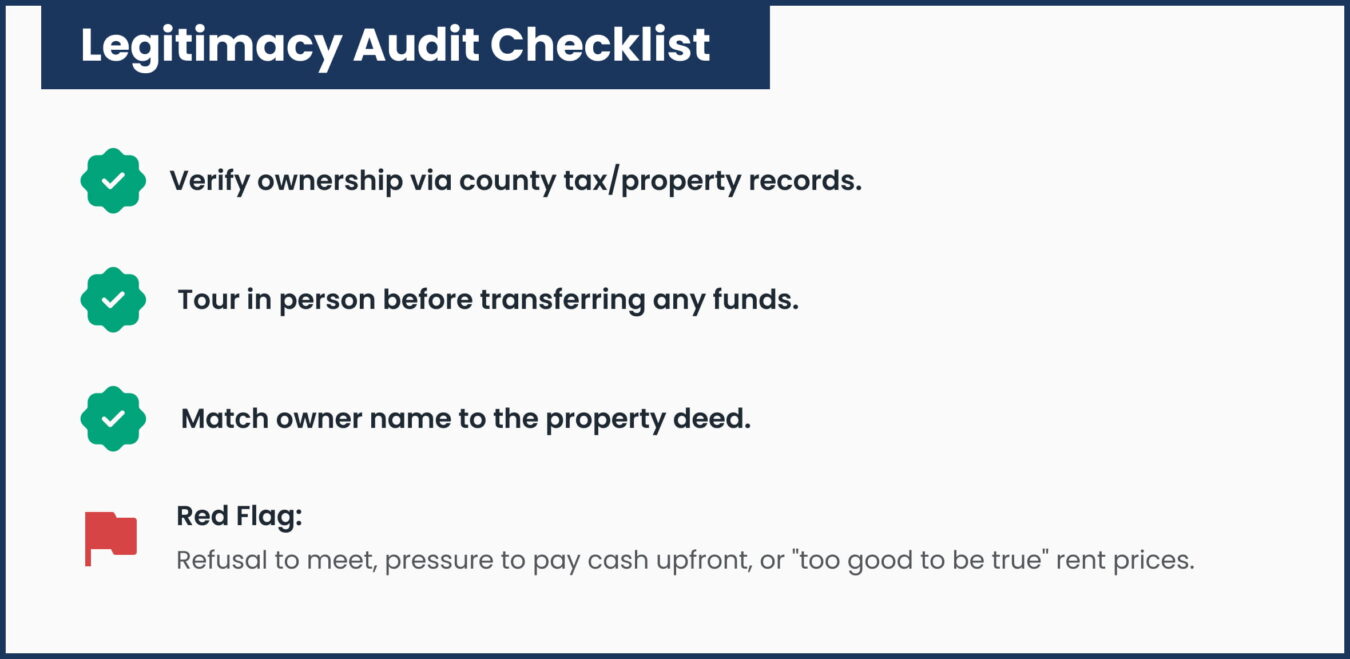
Once you’ve found a private landlord, it’s important to verify whether they’re legitimate, especially if you’ve found them through a platform like Craigslist or Facebook Marketplace.
Here are some checks you should run:
- Verify the property ownership through county property records. These are publicly searchable, so the process should be straightforward.
- Tour the property in person before paying.
- Ask for a copy of the property deed and match their name.
- Run a quick reverse-image search on the property. Scammers tend to reuse images from other listings.
- Ask questions about the property when you meet in person.
Apart from the due diligence, you should also watch for some glaring red flags like:
- Refusal to meet in person
- Pressure to pay a deposit before the property tour
- Price is significantly lower than the market rate
- Refusal to share property documents
Remember, legitimate landlords will always welcome reasonable questions. If you encounter strong opposition, it could be a scam.
How to Approach a Private Landlord
First impressions matter when you’re approaching a private landlord during the rental application process.
You should make a professional, brief first contact. Start by introducing yourself and asking about property and tour availability. You could also mention your income/credit score.
As private landlords don’t follow a specific structure for leasing properties, they tend to decide quickly based on first impressions.
So, it’s recommended to prepare a “renter’s resume.” It’s a one-page document that contains basic details like your income, credit score, references, photo, and employment background.
The idea here is to provide all the information a private landlord would want quickly. It can help you move fast on competitive units.
Application and Negotiation with Private Landlords
When you’re renting from a private landlord, the process can be far more flexible than with a property manager.
These owners may choose to waive eviction or credit checks altogether and agree to lease the property to you. However, they could negotiate harder on the rent or deposit.
It’s also important to get clarity and negotiate on other essentials like:
- Pet policy
- Lease duration
- Paint colors
- Maintenance/repair responsibility
- Renewal terms
- Utility bills and setup
One key thing to remember here is that landlords appreciate transparency. So, be honest and open about your situation with them.
Pros and Cons of Renting from a Private Landlord
If you’re considering renting a property from a private landlord, consider these advantages and disadvantages first.
Pros
- Greater flexibility: You can negotiate better lease terms and amenities with a landlord as you’re connected to them directly. Also, they may be more lenient with their screening criteria.
- Quick process: As you’re talking directly to the owner, the rental process tends to be much faster. They may look to close deals quickly to reduce vacant periods.
- Lower fees: Some private landlords could charge lower administrative fees compared to property management companies, which tend to have larger overheads.
- Personal touch: You talk directly to the owner, which helps you build a personal relationship with them. Also, you can easily contact them for any issues via text or phone instead of using an online portal.
- Long rentals: Many private landlords have multi-decade tenants. So, if you’re looking for a stable lease agreement, this could be the way ahead.
Cons
- Slower maintenance: As they’re managing properties all by themselves, the maintenance process could be inconsistent or slow in some cases.
- No emergency line: You can reach out to property management companies 24/7, but that may not be the case with private landlords.
- Fewer amenities: Private landlords often own single-family homes, which may not have a lot of amenities.
Weigh the pros and cons of leasing from private landlords and decide if it makes sense for you. If you feel like it’s the right choice, sign up on Rentler and start filtering for private landlords now.
Frequently Asked Questions About Private Landlords
Where can I find a house for rent by owner?
To find a house on rent from an owner, you can use these methods:
- Filter for “For rent by landlord” on Rentler
- Select the “From rent by owner” filter on Zillow
- Drive through your neighborhood and look for “For rent” signs
- Search on Google, Bing, and Google Maps
- Ask your network
Are private landlords more lenient than property managers?
Yes, private landlords tend to be more flexible and lenient than property managers as they consider each application on a case-by-case basis. Property managers usually are rigid in that regard.
How can I tell if a private landlord listing is legit?
To determine if a private landlord listing is legitimate, you should do the following checks:
- Verify ownership: Search public county property records to confirm the owner’s name.
- Tour in person: Inspect the property thoroughly before sending any money.
- Check the deed: Request a copy of the property deed and match it to their ID.
- Reverse-image search: Check listing photos online to ensure they aren’t stolen from other ads.
- Interview the owner: Ask detailed questions about the property during your in-person meeting.
Do private landlords run credit and background checks?
Private landlords do run credit and background checks but are more flexible than property managers. They may choose to avoid these checks if you request them.
Can I negotiate rent with a private landlord?
Absolutely! Private landlords are usually more flexible than property managers. You can negotiate lease terms and rent with them with ease by explaining your situation.
Is renting from a private landlord cheaper?
Yes, sometimes it may be cheaper to rent from a private landlord. You can negotiate lower upfront fees, longer leases, and flexible terms. However, it also boils down to the property location and the willingness of the landlord to negotiate.