
Getting locked out of apartment buildings is scary, especially late at night. Panic is a common response, but it usually doesn’t help the situation, and it can make it more difficult to think clearly. In this guide from Rentler, you’ll find step-by-step instructions for if you’re locked out of the house: what to do, who to call, and what to avoid.
TL;DR
If you’re locked out of your apartment, stay calm and double-check that you don’t have your keys. If you left a spare with a neighbor or family member, give them a call. If it’s an emergency, call the police. Otherwise, your landlord will be able to unlock the door, usually for a small fee. If all else fails, you can call a locksmith service as a last resort.
Stay Calm and Take Stock
“Oh no, I’m locked out of my apartment building. What do I do?”
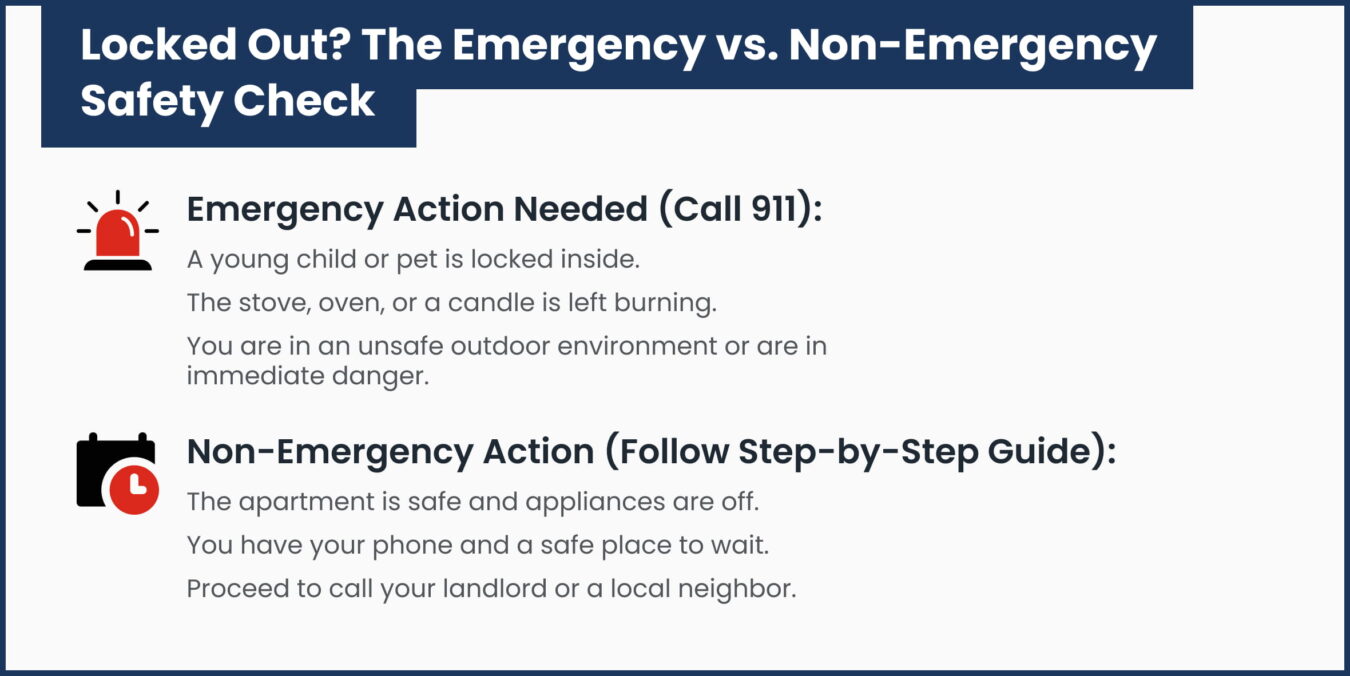
First of all, don’t panic! Even if this is the first time you’ve been locked out of your apartment building, it’s a more common occurrence than you think. That also means it’s fixable, and it’s rarely an emergency unless there’s an immediate safety risk.
Start by taking a deep breath, and remember this is temporary. Check your pockets, your bag, and your car one more time before escalating the situation. Look for nooks and crannies your apartment key might have fallen into, like the space between the car seat and console.
Next, let’s run through a quick safety checklist for immediate dangers:
- Do you have kids or pets in the unit that you need to get to right away?
- Did you leave the oven on or a candle burning?
- Is it safe to wait outside?
- Do you have your phone?
If it’s safe to wait for a bit, here’s a step-by-step guide for what to do if you’re locked out of your house.
1. Call Your Property Manager or Landlord First
Generally, your first call should be to your landlord. As the owner or property manager, they have legitimate access to the home and are likely to respond fast. Keep in mind that response times are usually quicker during business hours.
Some property management companies may have an after-hours emergency line for situations just like this. It’s even common for apartment buildings to have a dedicated 24/7 maintenance line specifically for lockouts.
You should also be aware that there’s usually a small fee for after-hours lockout assistance ($25-$75 is typical).
2. Check If a Neighbor Has a Spare
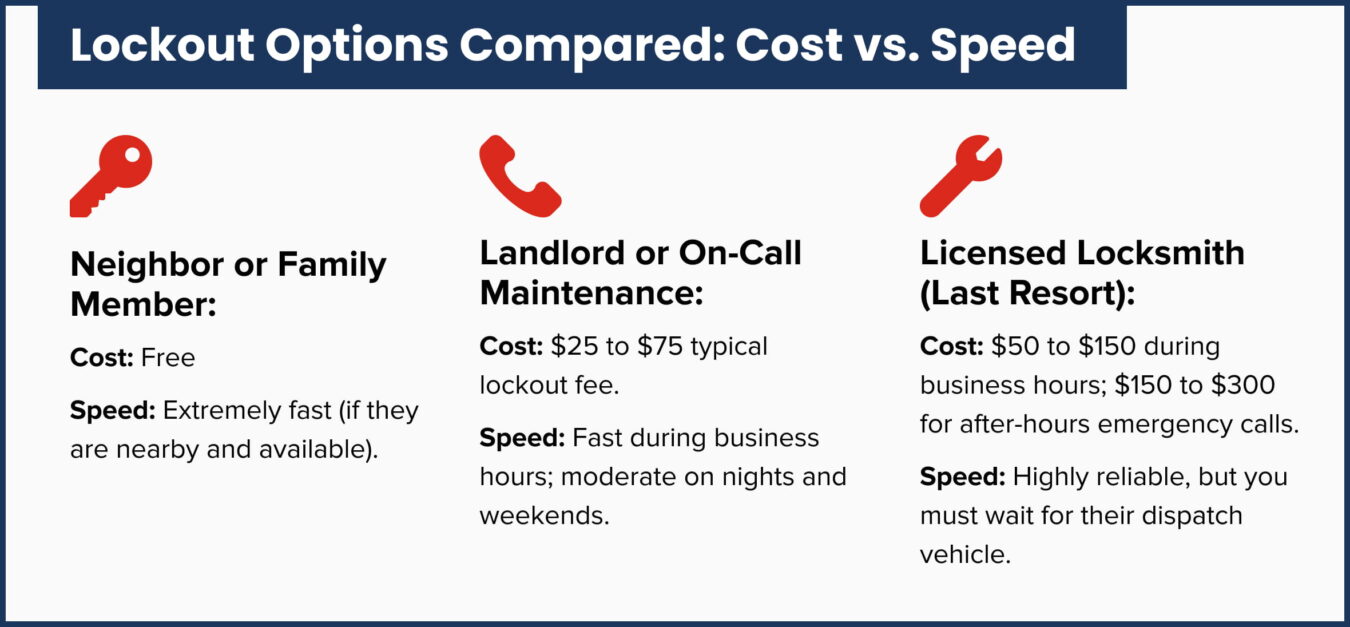
If you can’t get a hold of your landlord or after-hours assistance, you may be able to reach out to a friend or neighbor you’ve given a spare key to. If you haven’t entrusted a close friend with a spare key before now, this is a good reminder to do so.
For future reference, there are also apps and key-management services that can store a digital copy of your physical key. Using the digital file, these services can create a physical copy.
For renters who don’t have access to a spare or copy, don’t worry. There are several other steps you can take to get into your apartment.
3. Call a Locksmith (When Necessary)
As a last resort, you can call a private locksmith service to get you into your apartment. Locksmiths use a variety of methods to open a locked door, depending on the type of door and lock. So, how much is a locksmith for an apartment?
During business hours, you should expect to pay around $50-$150 for a locksmith. Most locksmiths charge more for after-hours and weekend lockout assistance. Fees for lockouts outside of business hours will be in the range of $150-$300.
You should call a locksmith only if your landlord isn’t reachable and you can’t safely wait. Renters should also be on the lookout for locksmith scams. Make sure the locksmith is licensed, get a quote before they show up at your apartment, and never let them drill into your lock without permission.
How to Choose a Reputable Locksmith

For renters locked out of apartments, a locksmith can open the door if all other options have failed. However, check the following to avoid getting scammed:
- Online reviews: Check Google and Yelp for positive (and negative) reviews.
- Local only: Make sure the locksmith is actually in your area(look for a physical address in your city, not just a 1-800 number).
- Get a quote: Get the price in writing before the locksmith begins any work.
- Red flags: Refuse to pay cash only or pay upfront before the work is complete.
- Verify on arrival: Ask for ID and license number when the locksmith arrives.
When NOT to Try Breaking In Yourself
If you’re locked out of the house, what to do depends on the time and your situation. You may be tempted to break into your apartment, but that’s almost never a good choice.
Forcing entry through windows or kicking in your door counts as property damage, which comes out of your security deposit. Even a broken lock might require full lock replacement at a cost.
Unless you are a trained locksmith, you should never attempt to pick the lock yourself. It looks easy on TV, but you’re more likely to fail and damage the lock than you are to get it open.
4. Report the Lockout to Your Landlord
Even if you manage to resolve your lockout without your landlord’s help, you should report it to them later. Some lease agreements even have clauses requiring notification of lock changes or replacement. Documenting the situation also helps protect you if the lock turns up damaged. As a result, it’s usually best to do this in writing, either via email or on your property portal.
How to Prevent Future Apartment Lockouts
To prevent getting locked out of apartment buildings in the first place, consider installing smart lock options like keypad entry or smartphone-controlled deadbolts.
It’s also a good idea to leave a spare key with a trusted neighbor, family member, or friend. You might install a secure key lockbox nearby as well.
Make it a habit to regularly check your pockets for your keys. Every time you leave your home, pat each of your pockets. For extra security, you can get a special phone case that holds a backup key. Some property managers also offer key escrow programs for an extra layer of security.
What Renters Should Know About Apartment Building Lockouts
If you find yourself making the dreaded “locked out of my apartment building” call, there are a few different potential outcomes.
For apartment renters, you might be locked out of the building entrance or just your particular unit. Most apartment buildings require a fob or buzzer to get inside. In the case of building-entry lockouts, the super, doorman, or property management can usually let you in.
If your key fob stops working unexpectedly, it could have been deactivated, or the battery might have just died.
Frequently Asked Questions About Apartment Lockouts
How much does a locksmith charge for an apartment lockout?
A locksmith usually charges $50-$150 for lockout assistance during business hours. For after-hours or weekend lockouts, the fee is usually between $150-$300.
Will my landlord charge me for a lockout?
Yes, it’s common for landlords to charge a small fee if you need assistance for a lockout. $25-$50 is common, but your lease agreement usually specifies the fee.
Can I call the police if I’m locked out of my own apartment?
You may be able to call the police for a lockout, but only in certain situations. Police typically only respond to lockouts if there is some sort of immediate danger, like a young child locked inside. The police will also respond if your landlord has illegally changed your locks.
What if I’m locked out at 2 a.m.?
If you’re locked out of your apartment at 2 a.m., check if your building has a dedicated 24-hour maintenance line for lockouts. Otherwise, try to get in touch with your landlord or a trusted friend/neighbor who has a spare key. As a last resort, you can call an emergency 24-hour locksmith.
Should my landlord give me a spare key?
Whether your landlord gives you a spare key depends on the terms of your lease agreement. However, it’s common for landlords to keep a copy of the key for each of their rental properties.
How do I avoid lockouts in the future?
To avoid lockouts in the future, leave a spare key with a trusted neighbor, friend, or family member. Always check your pockets to make sure you have your keys before you lock your door behind you.