
For renters in densely populated areas, tandem parking can be an efficient solution for roommates or partners to save space. It means having enough room for two cars, even with limited parking. However, a tandem parking spot comes with some caveats. In this guide from Rentler, we’ll define tandem parking and break down whether or not it’s worth considering for your renting situation.
Tandem Parking Meaning
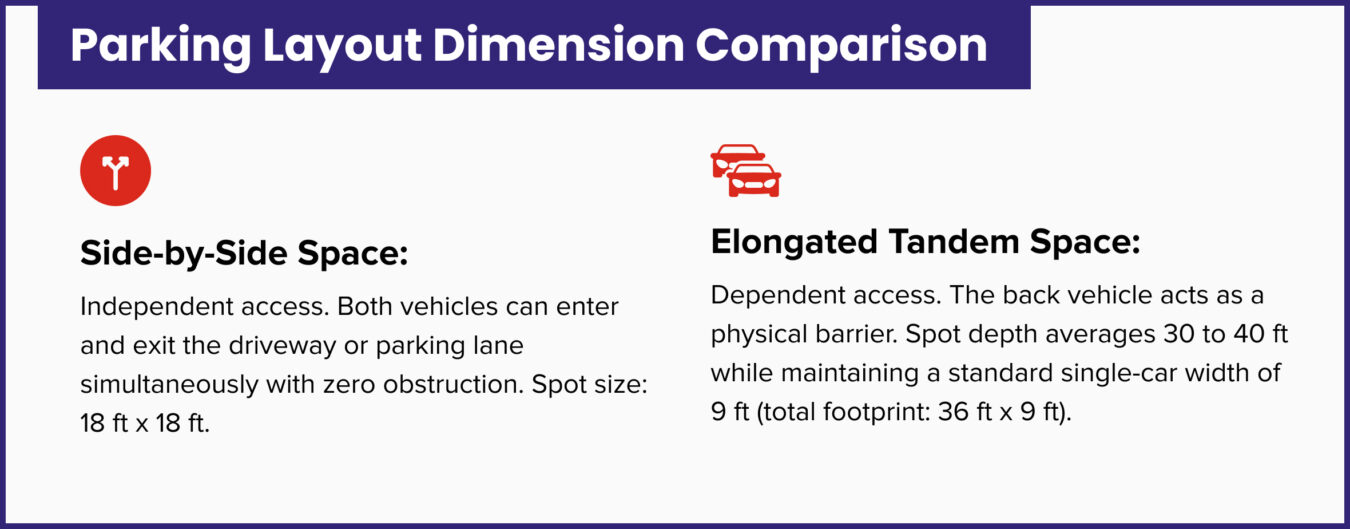
First of all, what is tandem parking? In short, tandem parking is a parking arrangement where two vehicles park one behind the other in a single, elongated spot. This is different from the more typical side-by-side parking arrangement.
Tandem parking is most common in dense urban apartment buildings, garages, and townhome developments. Having a clear understanding of tandem parking can help renters avoid surprises after moving into a new unit. Let’s take a closer look at how this parking arrangement works in practice.
What Tandem Parking Looks Like in Practice
A tandem parking spot is a long, narrow parking spot that’s only one car-width wide. This style of parking spot is usually 30-40 feet deep instead of the standard 18-20 feet.
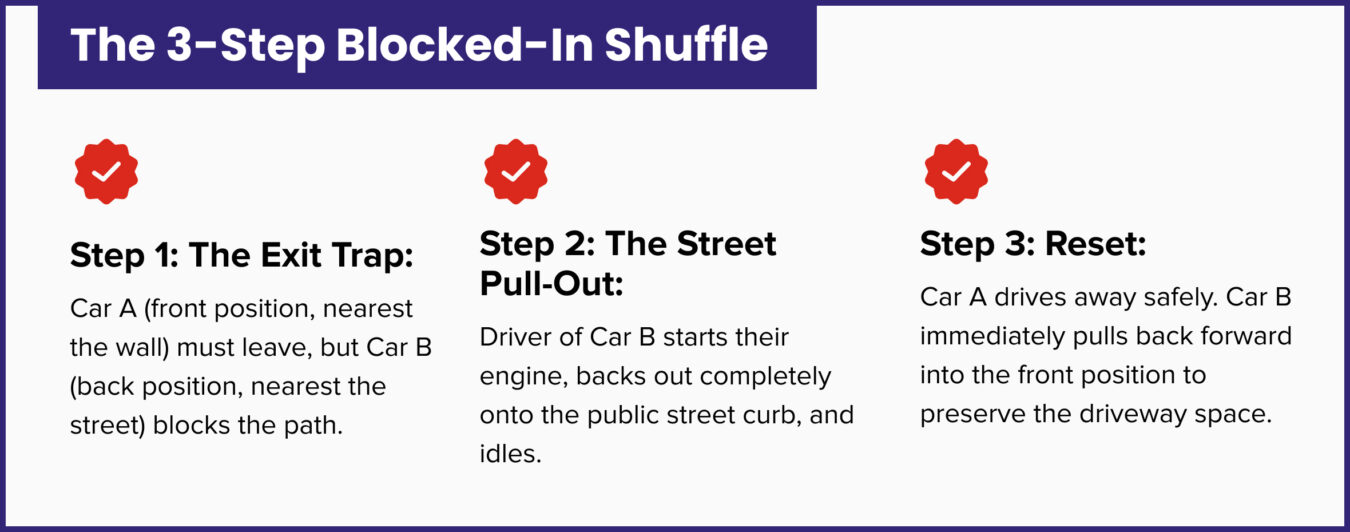
In this arrangement, the front car parks first and the back car parks second. As a result, the back car has to move out of the way if the front car needs to leave.
Tandem spots are usually assigned to a single apartment or house, shared between two roommates, in order to allow for easier coordination. It’s important to have an open line of communication in a tandem parking arrangement to avoid leaving the front car blocked in.
Tandem Garage vs. Tandem Parking Spot
You might also see the term “tandem parking garage” in some rental listings. So what is a tandem parking garage, and how does it differ from a tandem parking spot?
A tandem parking garage is exactly what it sounds like: an enclosed garage built deep enough for two cars front-to-back. This type of garage is different from the usual side-by-side two-car garage or single-car garage.
Tandem parking garages offer more security than a tandem parking spot, which is usually outdoors and isn’t enclosed. Not only does a garage keep the cars protected from theft, but it also prevents exposure to the elements.
Tandem parking garages are most common in newer townhomes, tiny homes, and smaller single-family homes. If you don’t end up needing both spaces, you can also repurpose the extra depth of the garage as a workshop, home gym, or storage space.
Pros of Tandem Parking
These are the advantages of a tandem parking arrangement:
- Extra parking in tight spaces: Two parking spots typically for the price of one in dense urban markets
- Dedicated space: Better than no parking, and saves the daily street parking hunt
- No parking fee: Tandem parking is often included with the apartment lease (no extra monthly fee for a second spot)
- Garage options available: In a covered garage, both cars get weather protection
- Prevents wasted space: Useful for households with two cars where one is rarely driven
Cons and Daily Frustrations
Tandem parking also comes with some drawbacks:
- One car blocked in: The back car can’t leave without moving the front car
- Requires communication: Coordinating departure times becomes a daily logistics task
- Scheduling: Hard to use if both household members work staggered schedules
- No outside parking allowed: Renting out the second spot to a non-household member is risky and often prohibited
- Potential space waste: Doesn’t work for single drivers since it would waste the back position
Who Should Consider an Apartment with Tandem Parking
While tandem parking doesn’t work for everyone, it can be an efficient parking option for certain living situations. Some of the ideal households for tandem parking include:
- Two-driver couples or roommates with predictable schedules
- Single drivers who rarely have guests
- People with two vehicles, where one is a seldom-driven “garage queen”
There are also living situations where tandem parking can create friction, such as:
- Opposite-schedule couples
- Multi-driver families with kids in activities
- Anyone with a frequent need for the second vehicle
If you’re apartment hunting in an area with limited parking, tandem parking may be a more common option. Before locking yourself into a tandem parking arrangement in a new rental unit, make an honest, realistic assessment of your household’s car use patterns. The last thing you want is to sign a lease only to realize that tandem parking doesn’t work for your living situation.
While tandem parking is usually a commitment, some landlords do allow tandem-spot reassignment if it becomes a problem.
How to Make Tandem Parking Work
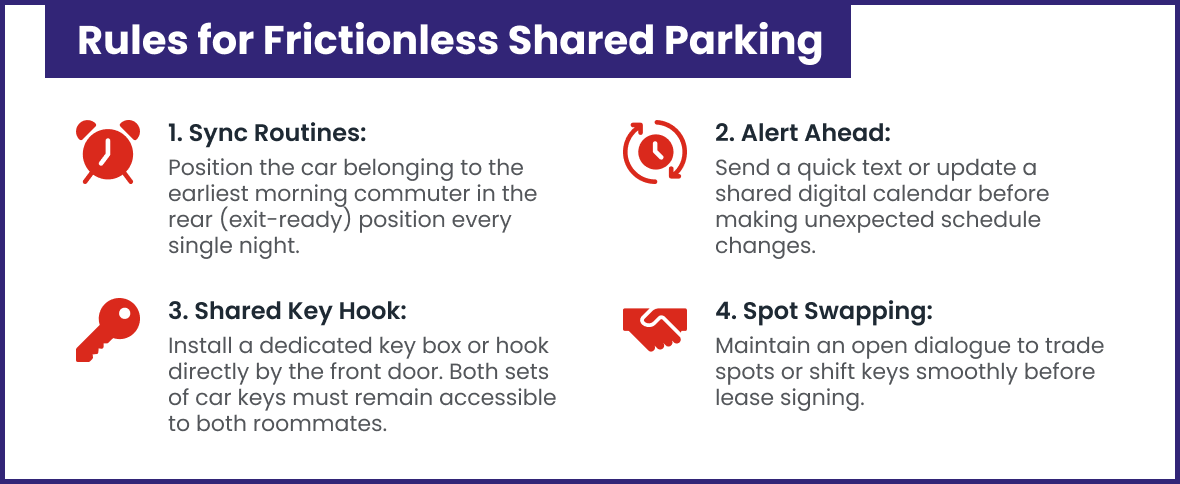
Here are some tips for a smooth tandem parking arrangement with your partner or roommate:
- Set a household routine: Make sure the front car is the one used earliest in the morning OR the most frequently.
- Use clear communication: Text before leaving and share driving schedules.
- Leave keys out: Keep both sets of keys easily accessible in case the front car needs to move urgently.
- Dedicated key storage: Consider a key-organizer or hook system near the door.
- Open dialogue: Talk through it before signing if you’re moving in with a roommate.
What to Ask Before Signing a Lease with Tandem Parking
There are a few important questions you should ask the landlord or property manager before you agree to a tandem parking spot:
- How are spots assigned to the unit (is it a specific spot or a rotation)?
- Is the spot covered or exposed?
- What’s the spot’s exact dimensions, and will both your vehicles fit?
- Are there height clearance issues for larger vehicles like SUVs or trucks?
- Is there any monthly cost above base rent?
- Can the second spot be sublet to someone in another unit?
Tandem Parking and Resale Value (For Renters Considering Buying)
If you plan to buy the rental unit (as in a rent-to-own arrangement), there are a few considerations if the home has a tandem parking spot. Keep in mind that tandem parking can impact a home’s future resale value if the buyer’s household has multiple drivers.
In condominium complexes with an HOA, it’s common for there to be rules about reassigning tandem spots as well. If you’re a renter who plans to buy in the same building, factor the parking arrangement into your decision.
There are some situations where tandem parking is an advantage. However, most buyers prefer side-by-side parking, so listings with separate parking spaces usually command a premium.
Frequently Asked Questions About Tandem Parking
What is tandem parking?
Tandem parking is a parking arrangement where two vehicles park one behind the other in a single, elongated spot. There are also tandem parking garages, which are narrow and deep enough for two cars to park front-to-back.
Is tandem parking safe for both cars?
Tandem parking is generally safe for two drivers. However, there is more of a risk of the back car bumping into the front one. Find out the exact dimensions of the tandem parking spot before you sign a lease and make sure there is enough space for both vehicles.
Can I park sideways in a tandem garage?
No, tandem parking garages usually aren’t wide enough to park your car sideways. If the garage is unusually wide for a tandem parking setup AND you have an unusually compact car (such as a Smart two-seat car), then it may be possible to park sideways in a tandem garage.
Do tandem parking spots cost less than regular spots?
Yes, tandem parking spots usually cost less than two regular parking spots. Since they are less convenient for most drivers, tandem parking spots typically come with lower fees. A home with tandem parking also tends to command a lower sale price.
Can I rent out the back spot to a neighbor?
Whether or not you can sublet the back parking spot to a neighbor depends on the terms of your lease. Some leases allow for the subletting of a tandem parking spot, while others restrict it to occupants of the same rental unit. If you do rent out the spot, make sure you have an open line of communication with your neighbor.
Is tandem parking allowed for two unrelated drivers?
Tandem parking is usually reserved for drivers who live in the same household in order to prevent the front car from getting blocked in. At the very least, the unrelated drivers need to have a way to reach each other in case the front car needs to move.