

Apartment keys are one of those things you don’t think about until something goes wrong – you’re locked out at 11 pm, you’ve lost a fob that costs $75 to replace, or you find out mid-move that you’re missing a tiny mailbox key that nobody mentioned at signing. The rules around apartment keys are less obvious than most renters expect, which makes it even more challenging.
Here’s everything you actually need to know—from spares to missing keys, and more.
TL;DR
Tenants are responsible for keeping their apartment keys stored in a safe place. To replace a key or key fob, it’s always best to contact your landlord or property manager first. Duplicate keys are often prohibited in many rentals, so make sure to read your lease before attempting to copy any apartment keys.
Types of Apartment Keys
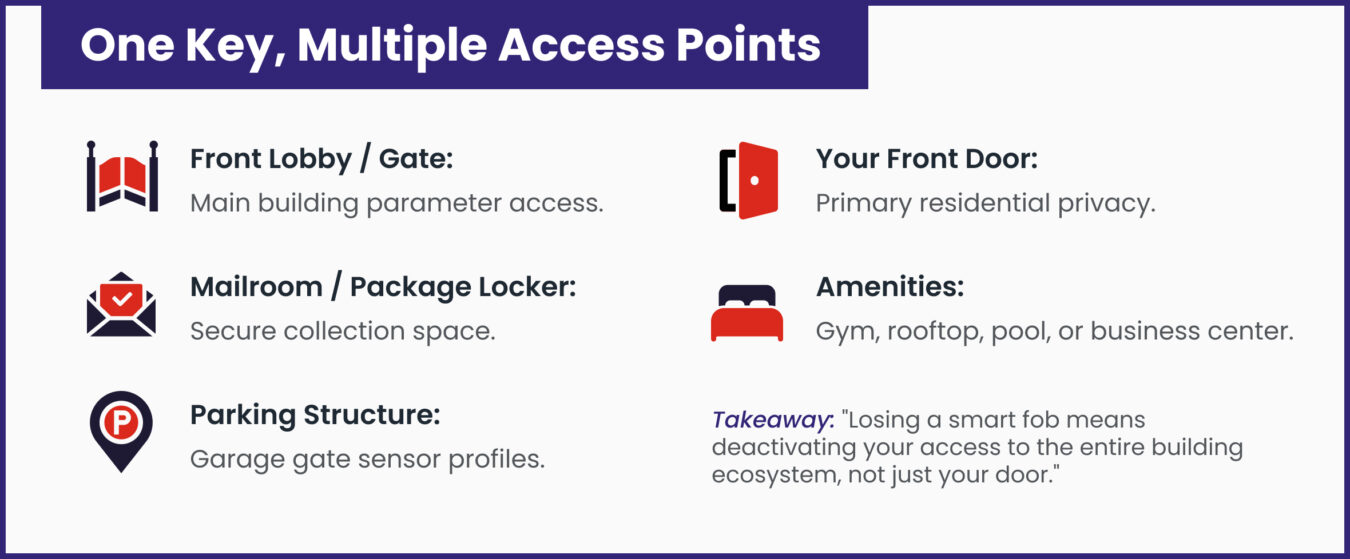
Most renters deal with more than one type of key, even in a single building. The standard metal key for your unit is obvious, but you’ve probably also got a key fob for the building entrance, a code for the gym or package room, and maybe even a separate mailbox key or garage remote.
Some newer buildings use smart locks or app-based entry. Many use some combination of all of the above.
Then there’s the master key – the one your property manager holds. Landlords are legally entitled to retain access for maintenance, inspections, and emergencies, but your lease should spell out the notice requirements.
In most states, the notice period is 24-48 hours, except in a genuine emergency. If you’re still in the rental application phase, our rental application process guide covers what else to expect at move-in.
How Apartment Key Fobs Work
A key fob works through RFID (radio frequency identification, if you want the full name). The fob emits a unique signal; the door reader recognizes it, and the door unlocks. That’s the long and short of how it works.
What’s loaded onto one fob varies by building, but it often covers more than the front door. It may include the parking garage, mailroom, gym, package lockers, or rooftop. Each access point is programmed separately, which is also why losing a fob is a bigger deal than losing a physical key. Property managers can also deactivate it remotely the moment you report it missing.
Most leases list a replacement fee or deposit for fobs in the move-in paperwork. Check yours before you assume it’ll be cheap.
Can You Make a Copy of an Apartment Key?
For a standard metal key, usually yes, but check your lease first. Some leases explicitly prohibit unauthorized duplication, and violating that clause can technically be grounds for a lease violation. It’s worth a two-minute read before you head to the hardware store.
You’ve probably seen keys stamped “Do Not Duplicate.” Here’s the thing: that stamp isn’t legally binding in most places. Hardware stores and locksmiths are generally asked to honor it, and many do, but there’s no law in most states preventing a copy from being made. Some shops will decline, and some won’t.
Key copies aren’t hard to get. Places that make them include:
- Most hardware stores (Home Depot, Ace, Lowe’s)
- A local locksmith
- Kiosks like Minute Key or KeyHero, which are found in many grocery stores and Walmart locations
Costs are usually pretty reasonable, running $3 to $10 depending on the key type.
How to Copy or “Clone” an Apartment Key Fob
Fobs can’t be cut like a metal key. They’re electronic, so the process is known as cloning, not copying. That means transferring the RFID signal from your existing fob to a blank one.
There are two ways to go about it:
- Ask your landlord/property manager: The official route is through your property manager. Most charge $30 to $80 for an authorized duplicate.
- Locksmith: The other route is a third-party locksmith or a fob-cloning kiosk, which is usually cheaper.
The catch: many leases and building rules specifically prohibit unauthorized fob duplication, and if the building discovers an unregistered fob, the consequences can range from a fine to a lease violation.
It’s also worth mentioning that not all fobs can be cloned. Some newer buildings use encrypted or high-security fob systems designed to prevent third-party cloning. If that’s your building, the only option is to go through the property manager.
What to Do If You Lose Your Apartment Keys
First, contact your property manager or landlord right away. If it’s a fob, they can deactivate it immediately so nobody else can use it to access the building. If it’s a metal key, reporting it also creates a paper trail that matters if anything goes wrong later.
For the immediate lockout situation, most buildings have a 24/7 maintenance or emergency line. If yours doesn’t, a locksmith is the next call. After-hours locksmith services typically run $75–$150, depending on your area and the time.
A couple of things not to do: don’t try to force your way in, and don’t post anything on social media connecting your name, your unit number, and the fact that your keys are missing.
Replacement costs vary, but expect $25–$75 for a physical key and $50–$100 or more for a fob, depending on your building.
Check out our landlord guide on rental property damage if you’re unsure what falls to you and what to your landlord.
Getting a Spare Key for Apartment Renters
The right way to get one is to ask your property manager. Many will provide an authorized spare for a small fee, and it’ll be on record. That matters both for security and for lease compliance.
Where you store it matters, too. A small combination lockbox mounted near your door (not under the mat, not on top of the doorframe) is a solid option. Leaving one with a trusted neighbor or friend works well if you have that option. What doesn’t work: anywhere obvious that a stranger could also figure out.
Some leases require you to disclose spare key arrangements, so check that clause if you’re not sure.
Replacement Key and Fob Costs: What to Expect
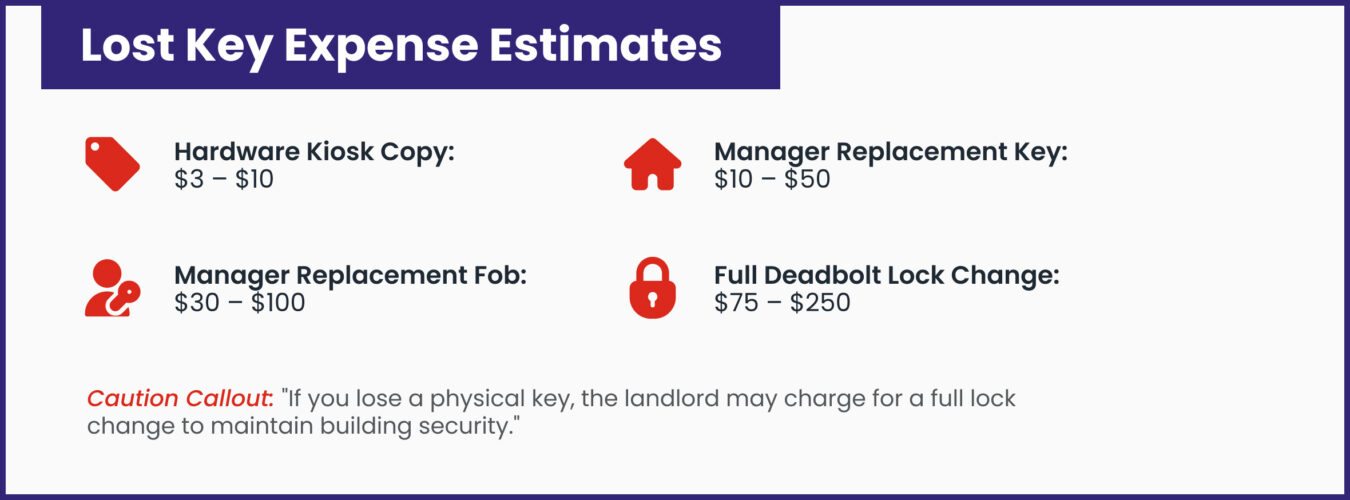
Here’s a quick reference on what things actually cost:
- Standard physical key copy: $3–$10
- Replacement key (from property manager): $10–$50
- Replacement fob: $30–$100
- Full lock change: $75–$250
Lost-key fees are usually either charged directly or deducted from your security deposit at move-out if you haven’t paid them. Some buildings require a full lock change when a physical key is lost (not just a new key) because there’s no way to deactivate the old one. That’s on the more expensive end, and it’s worth knowing before you assume a lost key is a $20 problem.
Your lease fee schedule should list all of this. If it doesn’t, ask for it in writing before you need it.
When and How to Notify Your Landlord About Key Issues
Some situations require you to notify your landlord – not just as a courtesy, but because it matters legally. Those include:
- A lost key or fob
- A lock that’s sticking or broken
- A fob that’s malfunctioning
- Any suspicion that your key has been duplicated without your knowledge
Do it in writing. A quick email or a message through your property management portal creates a timestamp and a record. If something happens after you’ve reported a lost key, that documentation shows you acted responsibly. If you didn’t report it and there’s a break-in, liability can shift back to you.
On the flip side, your landlord is responsible for keeping the locks in working order as part of normal maintenance. For more on how maintenance responsibilities break down, our recent tips for handling maintenance issues post is useful context. If you’re thinking about building security more broadly, our rental property break-ins guide is worth a look.
Returning Keys When You Move Out
This one bites more renters than it should. At move-out, most buildings expect back every physical key, every fob, mailbox keys, garage remotes, and any amenity keycards. Forgetting even one often triggers a lock change fee, which may come out of your deposit.
Make a list at move-in of everything you were given. When you return keys, photograph them all laid out before handing them over and ask for a signed receipt. If you’re dropping them off rather than returning in person, certified mail gives you proof of delivery.
Some leases require keys to be returned in person on the day of move-out – not slid under a door or left with a neighbor. Check yours on this point. It’s a common and avoidable source of deposit disputes.
Frequently Asked Questions About Apartment Keys
Can my landlord keep a copy of my apartment key?
Yes. Landlords are legally entitled to retain access to the unit (typically via a master key) for maintenance, inspections, and emergencies. What they can’t usually do is enter without proper notice, which in most states is 24-48 hours except in a genuine emergency.
How much does it cost to replace a lost apartment key fob?
Most replacement fobs run $30-$100, depending on your building’s system and what’s programmed on it. Check your lease for the exact fee schedule. Some buildings also require a full reprogramming fee on top of the hardware cost.
Is it illegal to copy an apartment key with “Do Not Duplicate” stamped on it?
Not in most states. The stamp is a request, not a legal restriction. Many hardware stores will honor it and decline to make a copy, but there’s no widespread law making it illegal to duplicate. That said, check your lease – unauthorized duplication may still be a lease violation even if it’s not a crime.
Who pays for a lost key – me or my landlord?
You do, in most cases. Lost keys are considered the tenant’s responsibility, and replacement or lock change fees are typically listed in the lease. They’re usually deducted from your security deposit if not paid directly. Normal wear on a lock is the landlord’s responsibility.
What happens if I lose my key at 2 a.m.?
Check whether your building has a 24/7 emergency maintenance line – many do. If not, an after-hours locksmith is your best bet. Expect to pay $75-$150 or more for after-hours service. Don’t try to force entry yourself – the damage charges just aren’t worth it.
Can my landlord enter my apartment with the master key without notice?
Generally no. Most states require 24-48 hours’ advance notice for non-emergency entry. Emergency exceptions apply for things like flooding, gas leaks, or fire. If your landlord is entering regularly without notice, document it and review your tenant rights in your state.