


If you’re currently apartment hunting, you know it’s common to send multiple applications before finding the right apartment and moving in. With each application, you also generally submit a background check and pay an application fee at some point. But what do apartments look for in background checks? And why do they need to do it?
In this Rentler guide, we’re taking a deep dive into each aspect of the background check for renters. We’ll explore what landlords are looking for in a renter, and what’s likely to show up on a report. You’ll also find out what your rights are as a rental applicant when it comes to background checks, and what constitutes an unlawful rejection.
What a Tenant Background Check Includes
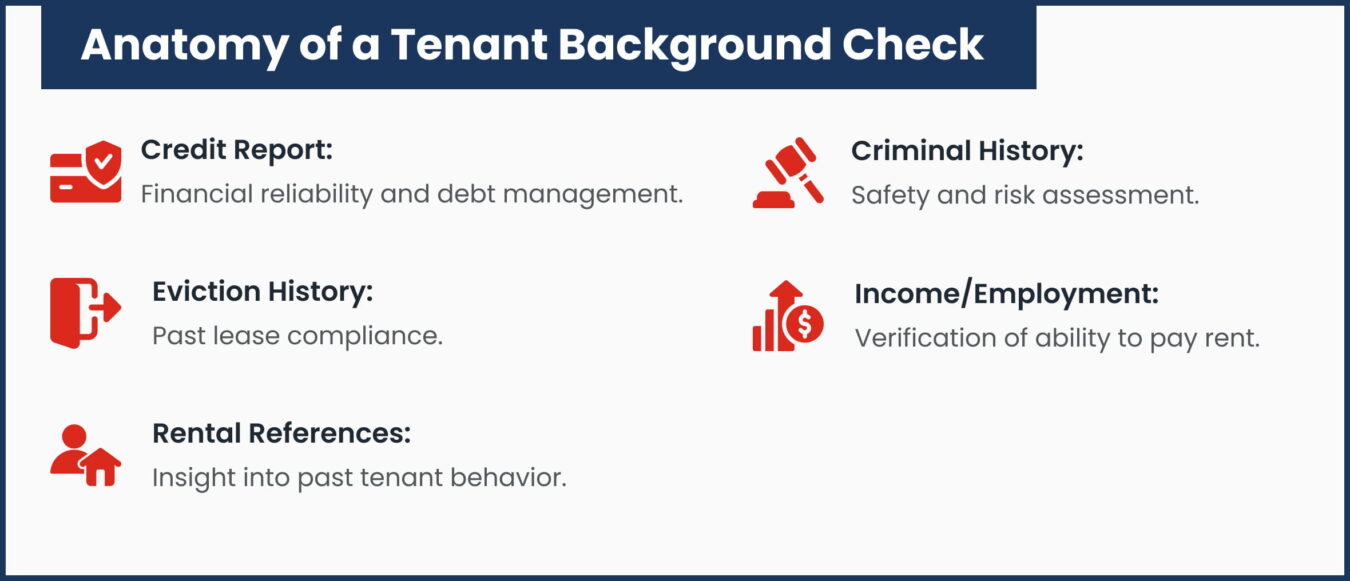
A background check is usually conducted by a landlord through a third-party service. The typical components of a tenant background check include the following:
- Credit report
- Criminal history
- Eviction history
- Employment/income verification
- Prior landlord references
However, not every screening service checks each of these categories, so different background checks might yield different compilations of results.
Landlords also check your rental references in addition to a screening service. Some landlords might ask each previous landlord questions, while others might not contact them at all. However, screening services typically verify rental history, and AI features are rapidly automating the process of checking rental references.
Some rental markets have restrictions on which background-check factors landlords are allowed to consider. For example, New York City and San Francisco have rules regarding the use of criminal history as a disqualifier for rental applicants.
This is just an overview of the basics of an apartment background check. Let’s take a more detailed look at each of these components.
Credit Checks: What Apartments See
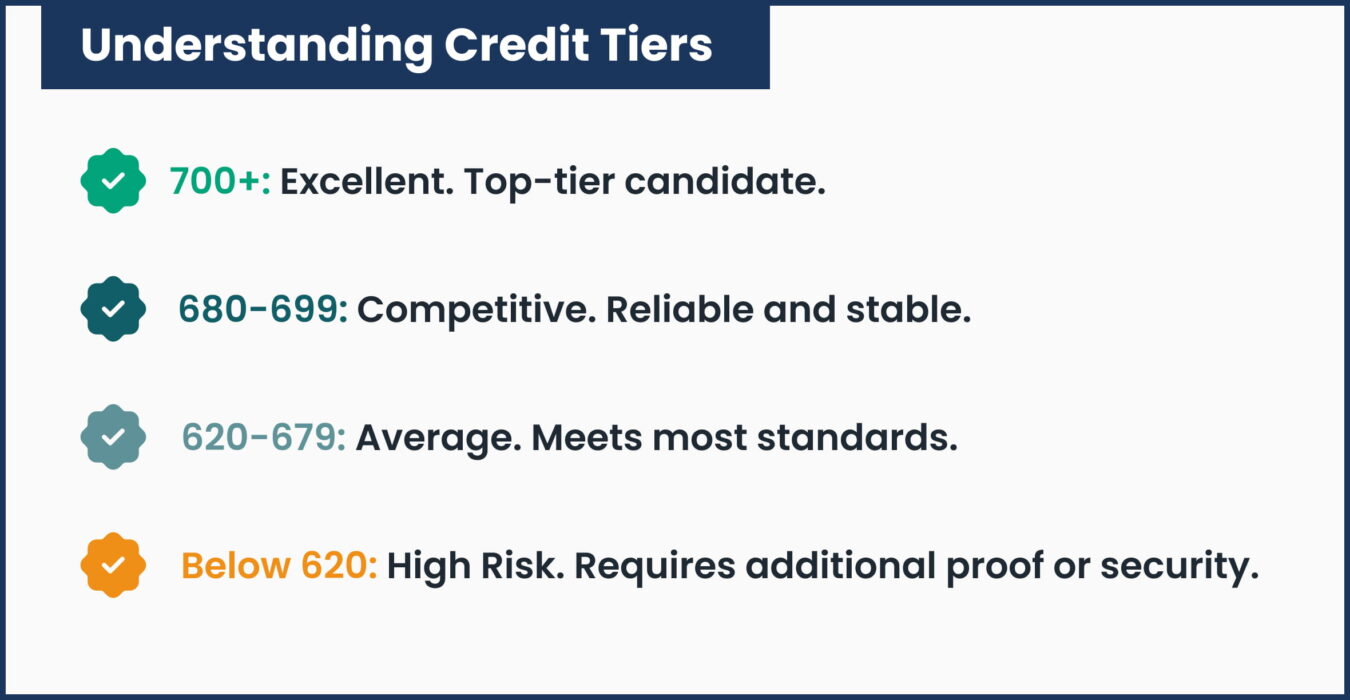
One of the first things a landlord considers on a background check is a renter’s credit history. This gives a concise overview of an applicant’s financial responsibility, and includes:
- Credit score
- Payment history
- Debt-to-income ratio
- Collections bankruptcies
- Recent credit inquiries
When it comes to credit scores, many landlords prefer a minimum of 620, but it is not a requirement for all. Applicants with a credit score of 680 or higher are considered competitive.
With each background check, the accompanying credit check shows up on your credit report as either a “hard pull” or “soft pull.” Most rental credit checks are “hard pulls,” which can temporarily bring your credit score down by a few points.
If your credit score is already on the lower end, you should be strategic about how many applications you submit. Consider using a free credit check service to get your own credit report before applying.
Criminal History Check
Another big disqualifier for landlord background checks is criminal history. Landlords typically review felony and misdemeanor convictions, pending cases, and sex offender registry checks.
Most states don’t restrict how landlords can use criminal history checks in their rental approval process. However, some areas have “Ban the Box” and Fair Chance laws that prevent blanket bans on applicants with minor offenses on their background checks.
“Ban the Box” is a campaign that requires landlords to evaluate applicants based on standard criteria like income and credit history. Only after extending a conditional approval can landlords in these areas run a criminal history check.
How recent a criminal conviction is also factors into how landlords review tenant background checks. The typical “lookback” period for a criminal history check is 7-10 years. In some cases, convictions from farther back than this may not even appear on your criminal history check.
If you have an incident that’s likely to appear on your criminal history check, it’s usually best to disclose it upfront in your cover letter. Waiting for it to show up on your background check can come across as dishonest and hurt your approval odds.
Eviction History Check
Rental history checks show things like eviction filings, judgments, and court records from tenant-screening databases. Even without a judgment, any eviction filings by previous landlords may be seen as a red flag.
Like criminal history, rental applications usually have a 7-year lookback period for eviction history. Be sure to review your tenant screening report before applying. Some databases may have inaccurate records that you can dispute.
Employment and Income Verification
Stable employment is one of the best ways to improve your rental application, although unemployment isn’t a 100% disqualifier. To verify income, it’s standard for landlords to request 2-3 of your most recent paystubs, employer contact info for verification, and/or your W-2 or tax return. Most landlords are looking for applicants who make 2.5-3x monthly rent.
Freelancers, self-employment, and gig workers can verify their income with bank statements, 1099s, or tax returns. Try to have your income documentation ready to go before you start applying for apartments.
Prior Landlord References
Applications will usually include a space for previous landlord references. While following up with your references, it’s common for landlords to ask about:
- Payment timeliness
- Lease compliance
- Property condition at move-out
- Whether they would rent to you again
Keep in mind that some landlords skip this step if other categories on the background screening check out.
Never supply fake landlord references on your applications. Landlords can easily check county property records and spot fake references, and they will reject your application.
As a courtesy, reach out to previous landlords to give them a heads-up before putting them down as references. If they know to expect a call, they’re more likely to give you a good reference.
How Long Does a Background Check Take for an Apartment?
When applying for apartments, most renters wonder, “how long does a background check take for an apartment?”
The automated portion of the background check usually takes 2-3 business days, but manual verifications can take longer. Most delays in the approval process are usually the result of waiting on employer/landlord callbacks, not the screening service.
To speed up the screening process, we recommend notifying employers and references to expect a call so they can follow up quickly.
What Counts as a Red Flag in a Background Check
Common red flags for apartment background checks include:
- Recent evictions
- Credit score below 580
- No credit
- Recent bankruptcy
- Criminal history within the lookback period
- Income under 2.5x rent
- Gaps in rental history
Landlords usually weigh the full picture when reviewing applicants; however, so one red flag may not be an automatic disqualifier.
If you know you have one or more red flags that will show up on your background check, there are a few things you can do to improve your approval odds:
- Have a cosigner apply with you
- Offer a larger security deposit
- Prepay rent in advance
- Supply character references
When you know something is going to surface on your background check, be transparent about it in your cover letter. Landlords value honesty in their tenants, so they may be more willing to overlook an issue if you’re upfront about it.
Your Rights During a Tenant Background Check
Like job applicants, you have legal rights when it comes to your rental application and background check. The Fair Credit Reporting Act is a federal law that requires reporting agencies to follow certain guidelines when collecting and sharing your credit information.
Under FCRA regulations, you have the right to a copy of your credit report and the right to dispute inaccurate information. Credit reporting agencies must investigate disputes within 30 days and delete incorrect records. The FCRA also requires landlords to disclose which screening service was used if you ask.
Landlords have to obtain your written consent before running a background check, and tell you if any information on your screening report was a contributing factor in rejecting your application.
As with any legal document, read any signed disclosures carefully.
How to Improve Your Apartment Background Check Profile
Here are some tips to improve your tenant background check profile:
- Pull and review your tenant screening report annually
- Pay down credit card balances before applying to lower utilization
- Maintain a stable rental history with on-time payments
- Build a paper trail of income with consistent pay stubs or bank statements
- Cultivate good relationships with past landlords for strong references
- Address any criminal record items through expungement where eligible
Frequently Asked Questions About Apartment Background Checks
What is a tenant background check?
A tenant background check is a screening report obtained by landlords to evaluate rental applicants. The report includes information about your credit history, criminal history, income information, and previous rental records. Landlords use all of this information to assess whether applicants will make good tenants.
Will a misdemeanor stop me from getting an apartment?
While any criminal conviction is a red flag for a rental application, a misdemeanor may not be an automatic disqualifier. Whether a landlord rejects your application or not depends on how long ago the misdemeanor was and the nature of the offense. Some areas have “Fair Chance” regulations prohibiting landlords from automatically disqualifying applicants on the basis of criminal history.
How far back does a tenant screening report go?
Most tenant screening reports go back at least 7 years. Certain aspects of your screening report may have different lookback periods. For example, rental history checks usually go back 3-5 years, while reports check for eviction filings as far back as 7 years. Other factors, like bankruptcies and criminal offenses, may show up for up to 10 years.
Can I be denied an apartment for bad credit alone?
Yes, your credit history is one of the biggest deciding factors for whether your rental application gets approved or not. Landlords use your credit history to evaluate your financial responsibility and how likely you are to pay rent on time. However, applicants with bad credit can still get approved; they just may need to put down a bigger deposit or get a cosigner.
What if my background check has an error?
If you find an error on your tenant background check, file a dispute with the reporting agency. Be sure to submit documentation verifying that the report includes inaccurate information. Federal law requires agencies to investigate disputes within 30 days.
How long does the whole apartment screening process take?
Most apartment background checks take 1-3 days for screening services, but the entire process may take as long as 3-7 days if the landlord needs to contact rental and employment references.