

Figuring out how to rent an apartment or house for the first time can be an exciting and overwhelming experience. To make the process as easy as possible, it’s important to be prepared and to know what to expect.
Getting Started: Renting an Apartment for the First Time
Renting your first place is a major financial and lifestyle commitment, and a mistake can end up costing thousands over a 12-month lease. For first-time renters, it’s easy to underestimate total monthly costs on top of rent, like utilities and fees. Ultimately, not taking these things into account can lead to budget strain.
However, rental arrangements are a risk for both the tenant and landlord. Particularly in competitive rental markets like urban areas and college towns, faster, more prepared applicants have the advantage. An organized approach to renting can help you steer clear of common pitfalls like scams, bad leases, or unsafe neighborhoods.
This guide from Rentler is your complete checklist for how to rent an apartment. We’ve put it together specifically for first-time apartment renter scenarios. We’ll cover the full lifecycle: budgeting, searching, applying, signing, and moving in.
Step 1 – Set a Budget Before You Start Apartment Hunting
Use the 30% rule: your rent should be no more than 30% of your gross monthly income. For example, if your income is $4,000/month your rent should be around $1,200.
Calculate your net income and subtract fixed expenses like loan payments, subscriptions, and insurance. Once you know your net income, factor in monthly costs beyond rent, such as:
- Utilities: $150–$350/month, depending on location
- Internet: $50–$100/month
- Groceries: $300–$500/month
Then, add a 10–15% buffer for unanticipated expenses like repairs, medical emergencies, and travel. Another pitfall to avoid is “budget creep.” Don’t tour apartments above your price range and then start straining your budget.
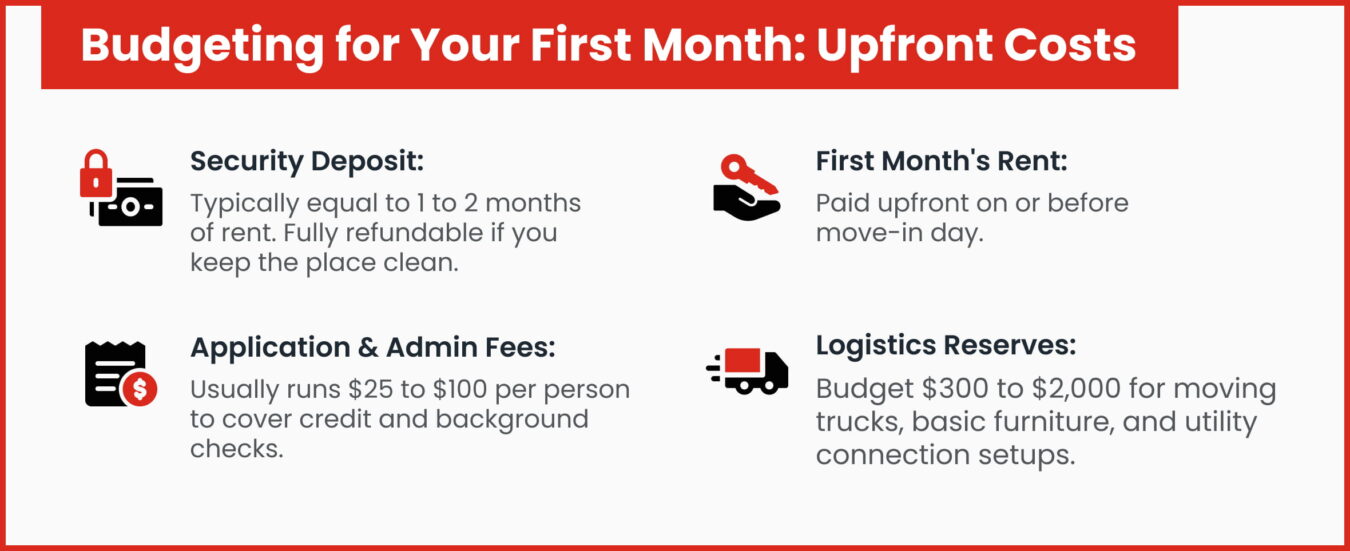
You’ll also need to determine the max upfront cash needed, or the “move-in cost.” This usually includes:
- Security deposit, typically 1–2 months’ rent
- First month’s rent (sometimes last month too)
- Application/admin fees: $25–$100
Finally, compare the cost of living alone vs. with roommates, which can reduce rent by 30–50%.
Step 2 – Understand What You Need to Rent an Apartment
Your credit score, income, and rental history each play a big role in determining whether or not you will be approved for an apartment or house.
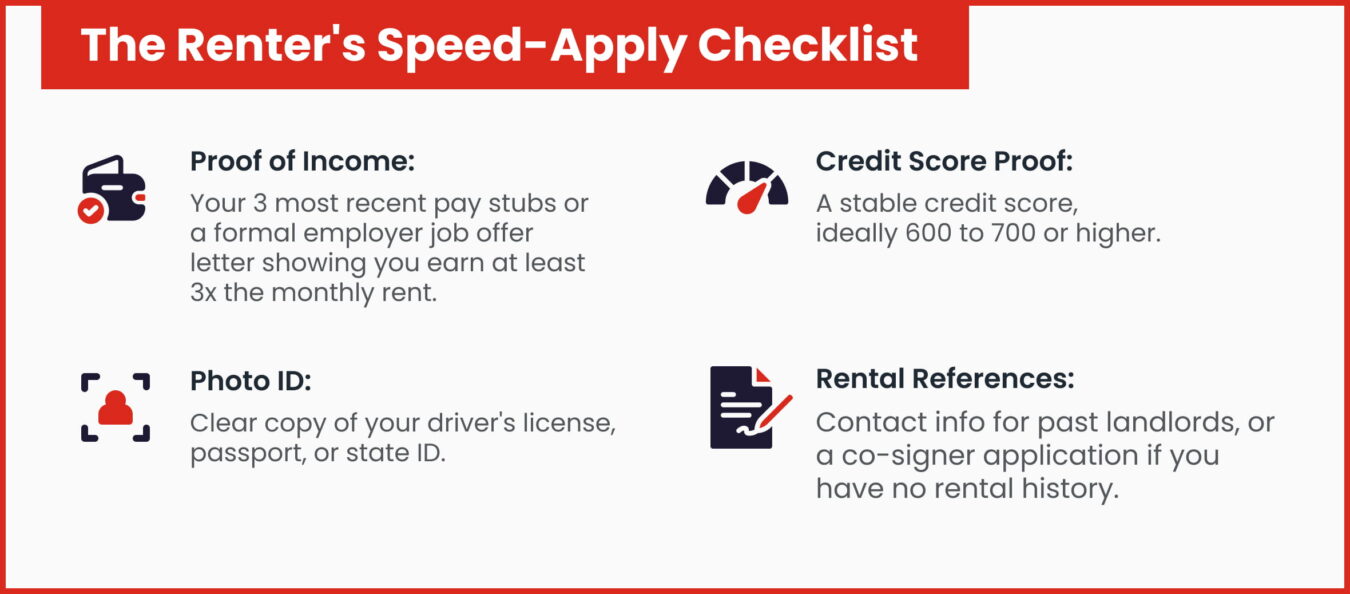
On applications, landlords typically require:
- Proof of income (2–3x monthly rent)
- Credit score (usually 600–700+)
- Photo ID
- Rental history or references
If you’re a first-time renter with no rental history, knowing how to get an apartment is a challenge. A co-signer or guarantor (usually required to earn 3–5x rent) can sign your lease with you. You might also offer a larger security deposit or provide bank statements or a job offer letter.
Keep in mind that hard credit checks may drop your credit score slightly, so don’t just “spam” applications. Keep your documents prepared in advance to apply quickly in competitive markets. Popular units, for example, may receive 5-10 applications within 48 hours.
Step 3 – Choose the Right Location and Apartment Type
Research the crime rates of the neighborhood, as well as walkability, transit access, and nearby grocery stores. Your commute is also an important factor. Is saving $200/month on rent worth an extra 10+ hours/week in travel?
Most rentals are either apartments or private rentals. Apartment complexes usually offer more amenities, but have a higher cost. Private rentals are often cheaper, but have fewer amenities.
Consider how to rent an apartment that fits your lifestyle. Do you prefer a quiet space or nightlife-heavy areas? What’s the proximity to work, school, gyms, and your social life? Remote workers might value space over location.
As a benchmark, national average rent is around $1,700, but this varies widely by city.
Step 4 – Define Your Needs vs. Wants (Avoid Overpaying)
Create a “must-have vs. nice-to-have” list. Must-haves might include budget, location, safety, and laundry access. Nice-to-haves could be a gym, pool, balcony, or upgraded finishes.
You should also consider hidden costs like parking fees and pet rent, which can add hundreds to your expenses. Luxury amenities can also add $100–$500/month in rent.
Apartment shopping is exciting, but don’t get “dream apartment” syndrome. Compare price to size, and stay practical.
Step 5 – Decide If You Need a Roommate
Having a roommate means less privacy and shared responsibilities. However, it can also save you 30-50% on rent and utilities.
Not everyone is compatible for living together, though, so have a conversation about cleanliness habits, schedule, guests, pets, and noise before moving in together.
Keep in mind that if your roommate doesn’t pay, you may still be liable. Even with a friend, consider a separate roommate agreement that covers rent split, chores, and house rules.
Having a roommate is best for:
- Students
- Early career professionals
- High-cost cities.
Step 6 – Search for Apartments Strategically
Use multiple platforms in your search, like listing sites, local Facebook groups, and property websites. Be sure to set alerts for new listings, and respond within hours in competitive markets.
Most sites let you filter by:
- Price
- Location
- Amenities
- Lease terms
Try to compare at least 3-5 options before deciding. Watch for signs of scams, like prices far below market, and never send a payment before viewing a rental.
Time of year is another factor in the housing landscape. Summer usually means higher prices, but more inventory, while winter offers fewer options and lower prices.
Step 7 – Tour Apartments and Spot Red Flags
When you tour a property, bring a checklist and take photos/videos for comparison later. Test essentials like water pressure, appliances, locks, and outlets.
Make sure to ask about:
- Total monthly cost (rent + fees)
- Maintenance response time
- Lease terms and renewal increases
Red flags to look for include:
- Mold, pests, and bad odors
- Poor maintenance or damage
- Unresponsive or evasive landlords
Visit at different times of day as well to compare noise levels, and check cell service and internet options. The right property will balance price, condition, and location.
Step 8 – Apply for the Apartment and Get Approved
Submit rental applications quickly and pay any application fees (usually $25-$100 per applicant). Be prepared for background and credit checks. The approval timeline is typically 24-72 hours.
You can improve your approval odds by providing complete documentation upfront or paying a higher deposit if needed.
If there are multiple applicants, the landlord may simply choose the applicant with the highest income and credit.
Step 9 – Read and Sign the Lease Carefully
Before signing a lease, make sure to read it carefully and understand all of the terms and conditions. Pay attention to details such as the length of the lease, the amount of the security deposit, and any restrictions on things like pets or guests.
Key lease terms to verify include:
- Monthly rent + total cost (including fees)
- Lease length (usually 12 months)
- Late fees and grace periods
- Penalties for breaking a lease early (often 1–2 months’ rent)
- Pet/guest policy
- Subletting rules
- Maintenance responsibilities
This is a legally binding document, so make sure to read all the “fine print.” In some cases, you may be able to negotiate rent, upgrades, parking, and the move-in date. Hidden fees in a lease can add $100-$300/month.
Step 10 – Prepare for Move-In and First Month
Understand the process for moving in and moving out of the property. This includes knowing when you can move in, when rent is due, and the procedures for returning the keys and getting your security deposit back.
Set up utilities like electric, water, and internet before you move in, and purchase renters insurance ($10–$25/month, often required). Before you get settled, complete a move-in inspection checklist and document damage with photos/videos so you aren’t liable.
Submit change of address to USPS, banks, and subscriptions. Then, plan for moving logistics. DIY is less expensive, but much more work. Movers may charge anywhere from $300-$2,000, depending on distance.
Budget for essentials like furniture, kitchen items, and cleaning supplies, and expect higher expenses than usual in your first month
Common Mistakes First-Time Renters Make (and How to Avoid Them)
These are some of the biggest mistakes to avoid as a first-time renter:
- Apartments above budget
- Ignoring total cost (fees + utilities) and underestimating monthly spend
- Not checking the lease for unexpected rules or penalties
- Skipping inspection and losing the security deposit later
- Falling for scams (always check listings and tours in person)
- Waiting too long to apply and losing desirable units
- Not documenting communication with the landlord
FAQs About How to Rent an Apartment
How much money should I save before renting my first apartment?
Try to have at least 3x your monthly rent saved up to cover security deposit, fees, and first month’s rent.
Can I rent an apartment with no credit history?
Yes, it is possible to rent with no credit history. You can improve your odds of approval by having a cosigner or paying a higher deposit.
What documents do I need to rent an apartment?
For a rental application, you’ll need proof of income, photo ID, and rental history.
How long does it take to get approved for an apartment?
Most rental applications get a response within 24-72 hours.
Is it better to rent alone or with roommates?
Renting with roommates can be a great way to save on rent and utilities (up to 30-50%), but it also means less space and privacy. Determine your budget and how much you value control over your space to help decide if you want roommates.
What should I look for when touring an apartment?
Check faucets, appliances, and power outlets, and look for red flags like mold, damage, or maintenance issues.