


Moving has a funny way of feeling like you have more time—until it sneaks up on you. One day, you’ve got plenty of time and resources, and the next, you’re wrapping dishes in old t-shirts at midnight because all the bubble wrap is gone.
Whether this is your first move or your tenth, a solid plan makes a big difference. Here’s your complete moving list of things to do, organized by timeline so you’re not scrambling when it counts.
Why You Need a List of Things to Do Before Moving
It’s tempting to figure things out as you go. However, without having a checklist, you could forget the most important items. Not to mention:
- A last-minute moving truck costs twice as much.
- Boxes that go unlabeled often become a mystery for weeks.
- Forgetting to call the utilities beforehand means showing up to a new apartment with no electricity.
And the list goes on! Organized movers typically save 10-25% on costs and 5-10 hours on moving day just by planning ahead. A structured moving list of things to do helps to decrease your mental load, which can already be overloaded during a move. Remember, when it’s written down, you’re not burning energy trying to remember what you forgot.
Master Timeline: Top Things to Do Before Moving (Step-by-Step)
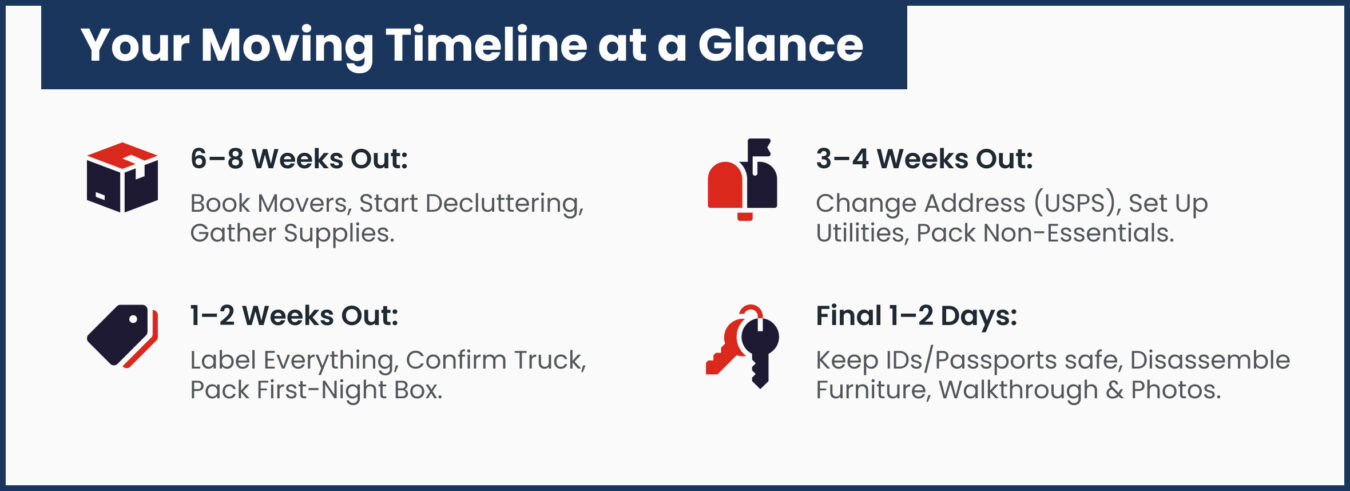
To feel really on top of things, start 6 to 8 weeks out. The earlier you begin, the more flexibility you have if something goes sideways.
6–8 Weeks Before Moving
1. Book your movers or rental truck first. Moving companies fill up fast, especially in summer and at the end of the month. Get at least three quotes, check reviews, and confirm they carry insurance. Booking early almost always means a better rate. If you’re still figuring out what to look for before starting your move, that’s a good read for around this time, too.
2. Create your master moving checklist. A Google Doc, a notebook, a notes app – whatever you’ll actually use.
3. Start decluttering. Moving fewer things saves money, time, and energy. Go room by room and sort into keep, donate, sell, and toss. Tackle the big stuff first: furniture, appliances, anything you’d have to pay extra to move.
4. Take inventory of valuables. Photos and written descriptions of electronics, jewelry, artwork, and anything else that’d be a pain to lose. You’ll have to have this if you need to file an insurance claim.
5. Gather packing supplies. Boxes, tape, bubble wrap, markers, and labels. Collect free boxes from grocery stores or buy them in bulk, since you’ll always need more than you think.
3–4 Weeks Before Moving
6. Notify everyone who needs your new address. Your employer, banks, credit cards, subscriptions, insurance providers – all of the above. Submit a change of address with USPS as soon as you have a confirmed move date. They only forward mail for a year, so the sooner the better.
7. Transfer or set up utilities. Electricity, water, gas, internet, trash. Schedule the cutoff at your old place and the start date at your new one. Arriving with no power or Wi-Fi makes a miserable first night that’s entirely avoidable.
8. Start packing non-essentials. Seasonal clothes, extra linens, books, decor, the stuff in the back of closets. You won’t miss it, and getting it boxed up now takes pressure off the final week.
9. Sell or donate what you’re not keeping. Facebook Marketplace and Craigslist are great for furniture and appliances. Local donation centers will usually take clothing, books, and small household items.
10. Measure your furniture against doorways and stairwells at the new place. Ask anyone who’s had to leave a couch on the sidewalk why this step matters.
1–2 Weeks Before Moving
11. Confirm your movers or truck rental. Call to verify the date, time, and address. Things can slip through the cracks on both ends.
12. Label every box. Room name, general contents, and whether it’s fragile.
13. Arrange childcare or pet care for moving day. Having kids or animals underfoot on moving day adds an unnecessary layer of stress. Arrange coverage in advance.
14. Refill any prescriptions and gather medical records. Easy to forget, and much harder to deal with when you’re in a new city and need them.
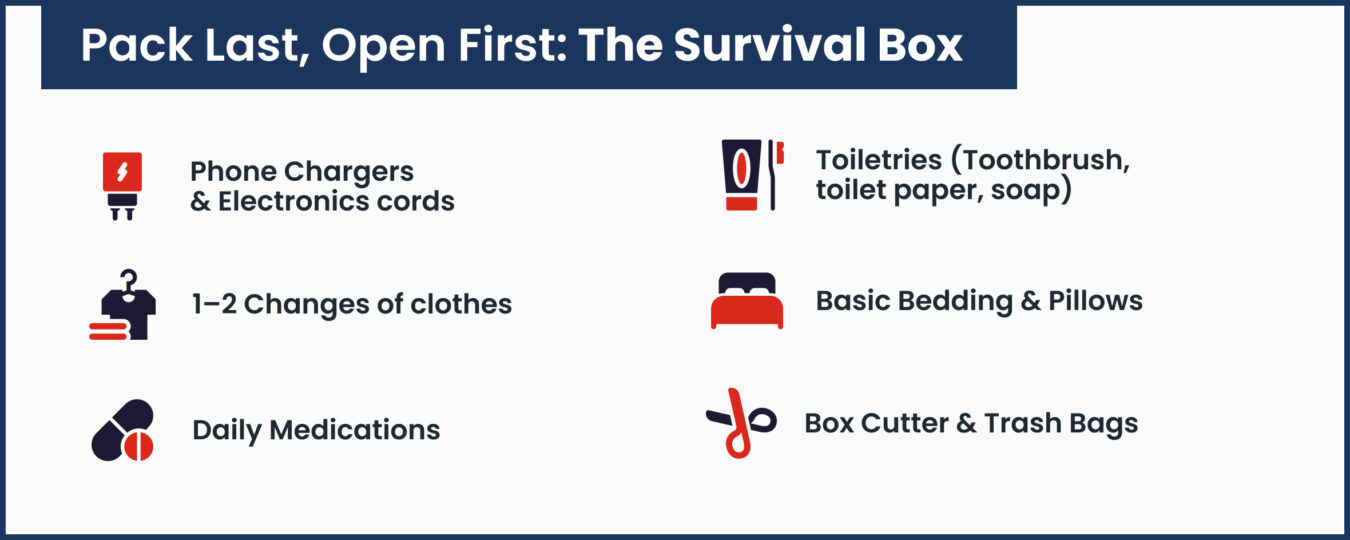
15. Pack a ‘first-night essentials’ box. This is a box that contains everything you’ll need for your first 24 hours. Toiletries, a change of clothes, phone chargers, bedding, and any medications. Label it clearly and load it last so it comes off the truck first.
16. Start clearing out the pantry and freezer. Plan meals around what you have. Less food to move, and you won’t be throwing money away.
Final 1–2 Days Before Moving
17. Pack a moving day survival kit. Snacks, water, paper towels, trash bags, a box cutter, and any medications you take daily. Keep this with you personally, not on the truck.
18. Set aside important documents. Passports, IDs, financial records, insurance cards. These travel with you, not in a box.
19. Disassemble furniture that needs it. Store all screws and hardware in labeled zip-lock bags, then tape them directly to the furniture piece.
20. Clean your current place, or schedule a cleaning service. If you’re renting, this one directly affects your deposit. More on that below.
21. Confirm arrival time with your movers one more time. And charge everything (phones, laptops, earbuds) the night before.
Packing Smart: How to Prepare for a Move Efficiently
Packing room by room and finishing one space before moving to the next makes unpacking considerably less chaotic.
A few rules that actually help:
- Keep heavy items in small boxes, and light stuff like pillows in large ones
- Wrap fragile items individually.
- Don’t overpack past 30–50 pounds.
- Before unplugging any electronics, photograph the cable setup. You won’t remember how it was wired, and that photo saves real time.
- Use color-coded tape by room so movers know where everything goes without asking.
Decluttering Before Moving: Save Time, Money, and Stress
Simple rule: if you haven’t used it in a year, you probably won’t miss it. Having less stuff means lower moving costs, fewer boxes, and a cleaner start at a new place. To make move-in day an easier load, set a rough target of cutting your total items by 20–40% before you move. This includes:
- Clothes you haven’t worn
- Duplicate kitchen tools
- Old electronics
- Books you won’t read again
Sell anything valuable on Facebook Marketplace, DePop, eBay, Nuuly, or OfferUp. Donate other goods to local charities, thrift stores, and even little free libraries near you. Anything not worthy of donating? Might be best in the trash.
Sentimental items are hard to part with, so do this gently. The key is to be honest about what’s actually sentimental versus what you feel obligated to hold onto. Ask yourself, “Would my future kids or grandkids want this item? Is this a valuable item? Is it hard to find if I want it again? Do I need this object around or is the memory good enough?
Anything you’re unsure of can be put in a box to think about. If you come back a month later and don’t miss any of the items in the box, feel free to donate them.
Critical Extras to Do Before Move-In Day
A few things people consistently forget until the last minute:
- Cancel or transfer your old services. Internet, gym memberships, and any streaming services that are tied to a billing address.
- Update your address everywhere. Banks, credit cards, Amazon, subscriptions, voter registration. The USPS forward only catches so much.
- Check parking logistics at the new place. In cities, especially, you may need a permit for the moving truck or a reserved loading zone. Apartment buildings may require advance notice to reserve the elevator. Find this out before moving day, not on it.
- Confirm your moving insurance. Know what your movers cover, what they don’t, and whether your renters’ insurance policy extends to the move itself.
For long-distance moves, plan your travel carefully, including gas stops, hotels if needed, and who’s driving what.
Preparing Your New Home Before Move-In
If you can get into the new place before your stuff arrives, do it. Cleaning an empty home is about ten times easier than cleaning around boxes.
Check that electricity, water, HVAC, and internet are all working. Look for anything to flag immediately, including leaks, broken fixtures, and any signs of pest activity. If you’re renting, photograph everything before you bring a single box in. That documentation matters if there’s ever a deposit dispute.
Pro Tip: Rentler’s tenant tools make it easier to stay organized while moving into your new apartment or rental.
Moving Day Essentials: What to Do When Moving
Keep your personal bag with you at all times. Don’t put your wallet, keys, or important documents in the truck.
Supervise the movers and give clear directions upfront, like which room is which, what’s fragile, and what needs extra care. Before you leave your old place, do a full walkthrough: every closet, cabinet, the garage, the attic, under the beds. Check the outdoor areas too. It’s shockingly easy to leave something behind when you’re exhausted and just want to be done.
Then, take photos of your old place before you hand over the keys. Especially if you’re renting, this is your record of how you left it. For more on protecting your deposit through the moving-out process, the Rentler guide on moving out covers it well.
Cash for tips is appreciated and often forgotten. The general range is $20–$50 per mover, or up to 20% of the total bill. If it’s a hot day or a lot of stairs, tip on the higher end.
Common Mistakes to Avoid
- Waiting too long to book movers. Prices spike as the date gets closer. Book early.
- Underestimating how long packing actually takes. Most people need two to three times longer than they expect. Start earlier than feels necessary.
- Not labeling boxes. Future you will thank yourself for knowing which boxes are kitchen, which ones are bedroom, and which ones are garage.
- Skipping the utilities setup. No power and no Wi-Fi on your first night is demoralizing in a way that’s hard to overstate.
- Packing valuables with the movers. Jewelry, important documents, and irreplaceable items travel with you.
- Ignoring building or parking restrictions. Find out the rules before moving day, not when the truck is already there.
- Moving things you should have decluttered. Paying movers to transport stuff you’ll just throw away at the other end is a waste of money. Be ruthless before you pack.
Pro Tips to Make Your Move Easier
- Use suitcases for heavy items like books
- Take a photo of a box’s contents before taping it shut
- Store screws and hardware in labeled bags taped to the furniture they belong to
- Schedule your move mid-week or mid-month if you have flexibility, since rates are lower and movers are less stretched
- Pack one clearly labeled ‘open first’ box per room with the immediate essentials
- Create a digital moving folder (Google Drive works great) for lease documents, mover contacts, utility confirmation numbers, and your checklists
FAQs About Things to Do Before Moving
What are the most important things to do before moving?
Book movers early, set up utilities at the new place, submit a change of address, and pack a first-night essentials bag. Those four things prevent the most common moving-day disasters. Everything else builds around getting those sorted well ahead of time.
How far in advance should I start preparing for a move?
Six to eight weeks is the sweet spot – it’s enough time to book movers at a decent rate, declutter properly, and handle the paperwork without it becoming a crisis. Two to three weeks is doable if that’s what you’ve got, just expect a more intense pace.
What should I pack last before moving?
Your everyday essentials: toiletries, clothes, phone chargers, medications, bedding. Your first-night box and personal bag should be the last things sealed up and the first things off the truck.
How do I create a moving list of things to do?
Start with your move date and work backward. Break tasks into 6–8 weeks out, 3–4 weeks, 1–2 weeks, and final days. A Google Doc or an app like Trello works well.
What utilities should I set up before moving in?
Electricity and gas first, then water if it’s not included, with internet close behind. Schedule the start date at least a week before move-in to allow for delays. Cancel or transfer services at your old address at the same time.
What is the biggest mistake people make when moving?
Starting too late. Almost every moving problem (overpriced movers, rushed packing, forgotten tasks) traces back to this. The people who move without losing their minds are almost always the ones who started six weeks out and worked a list.