


TL;DR:
A walk-up apartment is a unit in a building without an elevator, meaning residents use stairs to reach their floors. Typically spanning 3 to 6 stories, these buildings are common in older urban neighborhoods. They usually offer cheaper rent than elevator buildings, but lack modern amenities, making moving day a workout.
Owning or hunting for a rental in a dense urban city like New York or Chicago means running into some unfamiliar real estate terms. You might be wondering, “What is a walk-up apartment, exactly?” Well, it is pretty much exactly what it sounds like.
Walk-up apartments are among the most common housing types in older US neighborhoods, bringing unique benefits and real daily challenges. Before you sign a lease on that charming historic unit, there are genuine tradeoffs you need to understand. We’ll cover the definition, pros, cons, hidden costs, and practical tips for touring and living in one.
Walk-Up Apartments: A Quick Summary
So, what is a walk-up apartment? A walk-up apartment is a residential unit in a building without an elevator, where the only way to reach your floor is by climbing stairs. These structures are typically 3-6 stories tall and often feature pre-war construction. They are most common in older urban neighborhoods in New York City, Boston, Chicago, Philadelphia, and San Francisco.
When choosing between renting an apartment or a house, understanding what is a walk-up helps clarify your urban housing options. Many of these buildings exist because they were built before the 1988 Fair Housing Act amendments took effect on March 13, 1991. Today, cities like New York require elevators in buildings with six or more floors, which keeps the typical walk-up building fairly short.
Walk-Up Buildings vs. Elevator Buildings
So how do walk-ups actually compare to elevator buildings?

Living in a walk-up building and living in an elevator building are genuinely different daily experiences. The most obvious difference is access—stairs are the only route up in a walk-up apartment, full stop. Walk-ups also tend to be shorter, rarely exceeding 6 stories, while modern elevator buildings can reach much higher heights. And because most walk-ups were built decades before current construction standards, they tend to be significantly older than the average high-rise or mid-rise rental.
That age comes with a silver lining, though. Walk-ups often feature architectural details that newer buildings do not. Original hardwood floors, exposed brick walls, crown molding, ceiling medallions, and tall bay windows are all common finds.
On the flip side, walk-ups rarely include doormen, gyms, package rooms, or rooftop lounges—amenities that are standard in larger, amenity-rich elevator buildings. The result is a smaller, cozier, more residential feel with fewer tenants sharing your hallways.
Of course, the experience of living in a walk-up can vary quite a bit depending on which floor you end up on.
What to Expect: Walk-Up Apartment Floor Tiers
Your daily routine in a walk-up heavily depends on your specific floor. First-floor units offer the easiest access, which is fantastic on grocery day and moving day alike. However, they endure more street noise, receive less natural light, and offer less privacy. Since heat rises, the first floor also tends to stay cooler during hot summer months—a genuine perk if your building has no central AC.
The second and third floors are generally considered the sweet spot for most renters, as these offer a manageable climb while maintaining reasonable noise levels and decent natural light. By the time you reach the fourth and fifth floors, apartments are noticeably quieter and brighter, sometimes with surprisingly good views. But you shouldn’t forget the daily climb that can get significantly harder—especially when you are carrying laundry or a week’s worth of groceries.
Landlords recognize this inconvenience, so rent on higher floors is often discounted. Sometimes, top-floor residents also enjoy perks like skylights, higher ceilings, or rooftop access. When deciding what a walk-up apartment is going to feel like for you personally, think honestly about your physical comfort and daily habits. Beyond floor choice, walk-ups come with a distinct set of advantages worth considering.
Pros of Living in a Walk-Up Apartment
Walk-up apartments have stayed popular for good reason—they offer several real benefits for the right tenant:
- Lower rent: Walk-ups are typically much more affordable than comparable elevator buildings nearby because they lack luxury amenities and full-time building staff like doormen.
- Desirable neighborhoods: These buildings sit in character-rich, highly walkable districts close to great restaurants, boutique shops, and mass transit.
- Quieter living: With fewer tenants and no mechanical elevator noise, smaller buildings offer more privacy and less hallway foot traffic. Learning the ins and outs of apartment life often means appreciating these peaceful residential pockets.
- Built-in exercise: Climbing stairs every day provides real cardiovascular exercise without a gym membership. Your legs will know the difference.
- Architectural character: Pre-war details like high ceilings, large windows, exposed brick, and original moldings give these homes a personality that newer homes don’t always replicate.
That said, walk-ups come with some real tradeoffs that are worth weighing carefully.
Cons and Tradeoffs to Consider
Before signing a lease, be honest with yourself about the inconveniences that accompany stair-only living:
- Moving is harder and pricier: Getting couches, mattresses, and dressers into a walk-up is significantly more difficult. When planning your move, expect moving companies to charge surcharges of $75 to $150 or more per flight of stairs.
- Daily hauling: Carrying groceries, heavy packages, and laundry up multiple flights every single day gets old quickly—especially when you realize you forgot something in the car.
- Accessibility challenges: Walk-ups can be very difficult for visitors or family members with mobility issues, and they are notoriously tough for parents navigating stairs with strollers.
- No climate-controlled commute: There is no quick elevator ride up on freezing winter mornings or sweltering August afternoons. Top floors can get uncomfortably warm during summer.
- Extra delivery fees: Many flat-rate movers and delivery services add walk-up surcharges, and grocery delivery drivers may also charge extra fees per flight.
Should You Consider a Walk-Up Apartment?
So how do you know if a walk-up is actually a good fit for your situation?
The ideal walk-up renter is physically able-bodied, budget-conscious, and willing to trade some convenience for lower rent or a prime location. Young professionals and students are often a natural match, especially when they value historic charm over luxury amenities. Understanding what is a walk-up apartment really means assessing your daily tolerance for stairs—not just on a good day, but on a long, exhausting one.
Conversely, anyone with mobility limitations, families with young children, or individuals who move frequently will likely feel frustrated. Renters who order heavy packages online every week should also think twice.
When evaluating the pros and cons of apartment living, take an honest self-assessment about how much the climb will bother you once the novelty wears off. Walk-ups are rarely forever homes, but they make a smart financial choice for a specific life stage. If a walk-up sounds like it could work, the next step is understanding the full cost picture.
Costs and Hidden Fees
The price tag on a walk-up apartment is hard to ignore. These units typically run 10-20% below comparable elevator apartments in the exact same neighborhood. However, certain offsetting expenses can eat into those numbers.
Professional moving companies routinely charge walk-up surcharges of $75 to $150 or more per flight. Furniture delivery fees run higher as well, and some grocery delivery services tack on extra charges for stairs—all of which are industry standard. Pet ownership creates additional hidden costs, too, especially for older or larger dogs that struggle with multiple flights and might need specialized walking services.
What to Inspect When Touring a Walk-Up
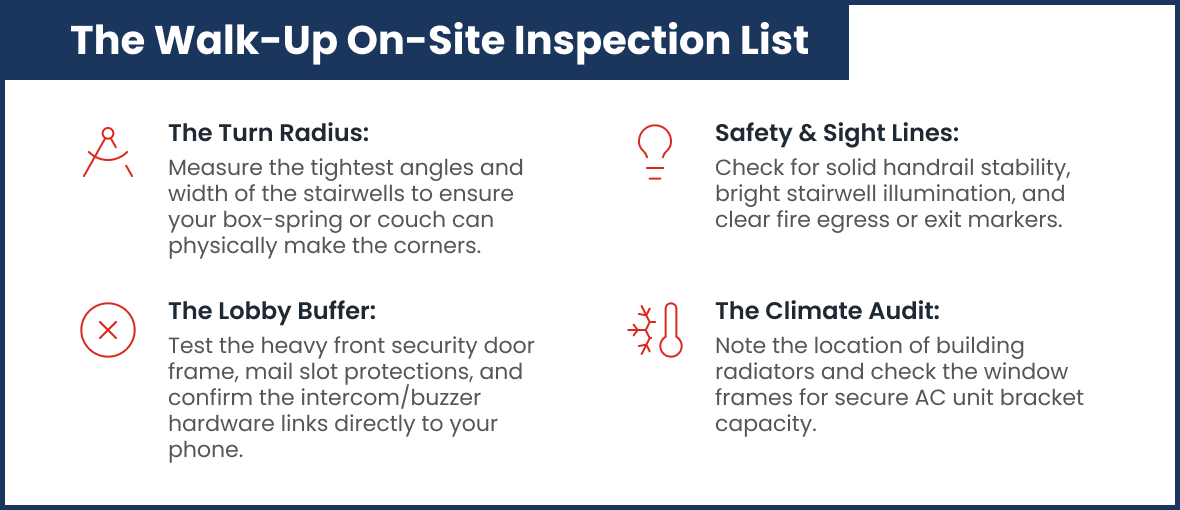
When you tour a walk-up building, pay close attention to the details you will be living with every day. Examples of such include:
- Stairwell condition: Check cleanliness, lighting, handrail stability, and staircase width. Narrow, dimly lit stairwells get old fast.
- Building entry: Note how heavy the front door is and test whether the intercom or buzzer system actually works.
- Mail and packages: Look for a designated mailroom or secure lobby area to understand how daily deliveries are handled.
- Fire safety: Always check for clear fire egress signage and accessible fire exits.
Walk the full climb at your normal pace before signing anything—be honest about how that trip will feel twice a day, every day. You should also check for rooftop access and locate the laundry facilities, which are often in the basement. Finally, note the climate control setup. Older walk-up buildings frequently have radiator-only heat and no central air conditioning, meaning window AC units will likely be your summer companion.
Tips for Living Well in a Walk-Up
A few small routine changes go a long way when you are living above the first floor, which may include:
- Use a sturdy backpack: Haul your groceries in a comfortable backpack instead of juggling multiple plastic bags up the stairs. Your hands and your sanity will thank you.
- Order grocery delivery for bulk items: Save your back by ordering heavy essentials like pet food, bottled water, or cleaning supplies online.
- Get a rolling laundry cart: If the shared laundry room is in the basement, a wheeled cart makes navigating the stairs much safer and easier.
- Coordinate large deliveries: Make sure you are home when big packages arrive so you can handle them right away rather than making extra trips. When furnishing your new apartment without breaking the bank, choose lightweight, multipurpose pieces that are easier to carry upstairs.
- Befriend your neighbors: In a smaller building, friendly neighbors often help with packages, provide an extra set of eyes on security, and make the whole experience feel more like a community. Finding quiet hobbies to try that your small apartment can handle also helps you appreciate your cozy space.
Looking for a rental? Sign up for a free Rentler account today.
Frequently Asked Questions
How many floors count as a walk-up?
There is no official legal cutoff, but walk-up buildings generally have 6 stories or fewer. In New York City, buildings with 6 or more stories are required to have an elevator, so most walk-ups are 5 floors or under. Nationally, 3-6 stories is the typical range for this housing style.
Are walk-up apartments cheaper?
Usually, yes. Walk-up apartments are best known for affordability, typically renting for 10 to 20% less than comparable elevator apartments in the same neighborhood. Higher floors often cost even less to offset the daily inconvenience of climbing stairs and the absence of luxury amenities.
Do walk-ups have laundry?
Some buildings offer shared laundry facilities, which are usually located in the basement. In-unit washers and dryers are rare in older buildings due to plumbing and space constraints. Many residents rely on nearby laundromats or use laundry pickup and delivery services as a practical alternative.
Can I get a delivery to a walk-up apartment?
Yes, but it depends on the delivery service and your building setup. Standard packages are mostly left in the lobby or front entrance area. For heavy items or furniture, many companies charge an extra fee per flight of stairs, so it helps to be home during larger deliveries.
Is it bad to live on the top floor of a walk-up?
Not necessarily—it comes down to personal priorities. Top-floor units tend to be significantly quieter, receive brighter natural light, and sometimes include private roof access. The main downsides are the daily climb and the fact that top floors run warmer during summer months without central AC.
Do walk-up buildings ever have elevators?
By definition, a walk-up building does not have an elevator. If an owner adds one through major renovations, the property would no longer technically be considered a walk-up. The vast majority of these older structures remain strictly stair-access only.