
TL;DR
If you’re looking for an affordable rental in a competitive market, an efficiency apartment might be the right choice. This isn’t quite the same as a studio or one-bedroom unit, but if you’re looking for a budget-friendly place to live, you might enjoy a practical solution with lower rent and easier living. Understanding the layout, amenities, and tradeoffs can help you decide if this kind of rental would work for your lifestyle.
If you’re asking, “What is an efficiency apartment?” you’re not alone. Many people are in search of a more efficient apartment, energy-wise or space-wise, but they aren’t sure of the definitions. For starters, this kind of apartment is a small rental unit with its living room, bedroom, and dining area all in one space. It has a separate bathroom and a compact kitchenette, not a full-sized kitchen. It also comes with a lot of pros for renters. Let’s go over it more below.
Efficiency Apartment: Definition and Guidelines
The efficiency apartment definition typically refers to units that are less than 300 square feet, though sizes can vary by building and location. In some older rental listings, you may also see these units referred to as bachelor apartments.
The defining feature isn’t the size, but the kitchenette. While studios generally have a full kitchen, efficiencies are designed with minimal cooking facilities, making them one of the most compact housing options available.
Typical Size and Layout: What Is an Efficiency Apartment?
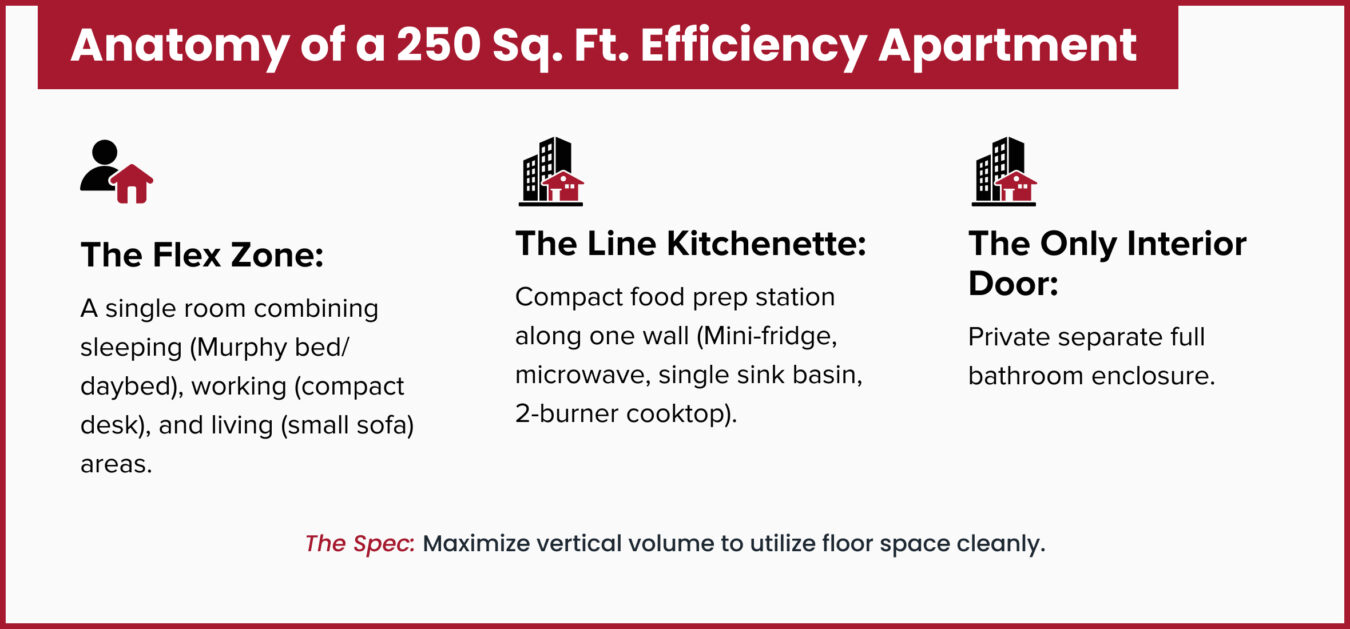
Instead of fixating on efficiency apartment meaning, visualize the layout for a clearer idea. Most efficiency apartments range from approximately 200 to 300 square feet. Every part of the unit serves multiple purposes, making efficient use of limited space.
Typically, the main room functions as a living area, sleeping area, workspace, and dining space all at once. The kitchenette is usually installed along one wall, while the bathroom sits behind the unit’s only interior door.
Compared to a typical studio apartment, which often averages around 450 square feet, efficiencies feel noticeably smaller. Storage is frequently limited, with small closets or no closet at all. Some units incorporate Murphy beds, daybeds, or sleeper sofas to maximize floor space.
Living in an efficiency means every square foot has a purpose, and thoughtful organization becomes essential.
The Kitchenette: What Makes an Efficiency Different
One of the most important aspects of the definition of efficiency apartment living is understanding the kitchenette.
A typical kitchenette has a mini refrigerator, microwave, compact sink, and sometimes a two-burner cooktop. It’s not like a standard kitchen, and there’s no full-size stove, oven, extensive counter space, or large appliances.
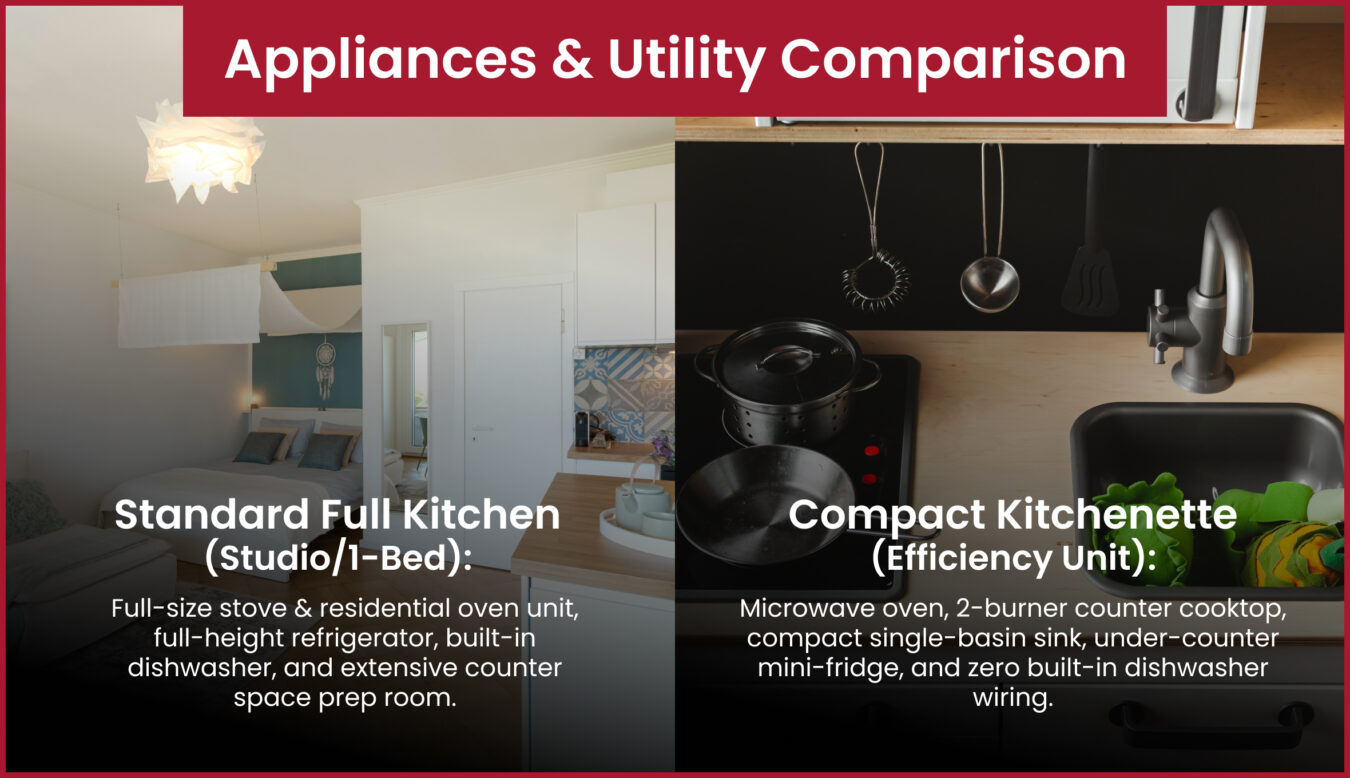
Some efficiency apartments also don’t have dishwashers and offer only a single-basin sink. While these limitations help keep the unit compact and affordable, they can affect your daily routine.
Renters who enjoy elaborate meal preparation may find the setup restrictive. Cooking often revolves around simple meals, microwave-friendly recipes, or occasional dining out. Before renting an efficiency, consider how often you cook and whether a kitchenette can realistically support your habits.
Efficiency Apartment vs. Studio Apartment
The debate around efficiency apartment vs studio rentals is common because the two layouts share many similarities. However, there are several important differences.
Generally, efficiencies are smaller and more affordable than studios, but studios typically have a complete kitchen with a full-size stove and refrigerator, giving you more cooking flexibility.
That said, terminology varies by region. Some landlords use “studio” and “efficiency” interchangeably, so it’s important to review floor plans and photos carefully before scheduling a tour.
What Is an Efficiency Apartment: Pros of Renting
Efficiency apartments appeal to renters for several reasons, especially in expensive housing markets.
The biggest advantage is affordability. Rent is often lower than comparable studios or one-bedroom apartments in the same neighborhood. For renters on a budget, this can make desirable locations more accessible.
Utility costs also tend to be lower because there is less space to heat, cool, and light. Smaller apartments generally require less maintenance and take far less time to clean.
Another benefit is the encouragement of minimalist living. Limited space naturally reduces clutter and encourages intentional purchasing decisions.
In many urban areas, efficiency apartments provide access to downtown neighborhoods and convenient amenities that might otherwise be financially out of reach.
Cons and Tradeoffs to Consider
Despite their advantages, efficiency apartments come with some compromises. The most obvious issue is limited cooking space, because small appliances and restricted counter space can make meal preparation difficult if you cook regularly.
Storage is another common concern, as the closets are often very small and you might not have any pantry space, either. Renters may need creative storage solutions to stay organized.
The open layout can also create challenges, because sleeping, relaxing, entertaining, and working all happen in the same room. This lack of separation may feel restrictive, especially for remote workers, and hosting guests can be awkward due to limited seating and privacy. Additionally, furniture often needs to serve multiple functions, which may require careful planning and investment.
Who Should Live in an Efficiency Apartment?
Not every renter will do well in an efficiency apartment, and these units are often best for solo occupants looking for affordable housing. Students, young professionals, recent graduates, and people relocating to a new city often find practical, cost-effective efficiencies.
If you travel a lot, you might also like having a comfortable home base without paying for extra space you’re not using.
However, couples may find the layout too cramped for long-term living. Individuals who work remotely full-time often struggle without a dedicated office area. Likewise, renters who enjoy cooking elaborate meals may become frustrated by the limited kitchenette.
When you’re asking, “What is an efficiency apartment?” and deciding if it’s right for you, be honest about how much time you spend at home. For many renters, an efficiency apartment is a great stepping stone, not a permanent housing solution.
How to Find Efficiency Apartments for Rent
If you’re looking for an efficiency apartment, you need a different search strategy than traditional apartment hunting.
Start by filtering listings based on square footage and budget. Since many efficiency apartments fall below 300 square feet, size filters can help narrow your options.
You should also search using multiple terms. Some landlords advertise these units as “efficiency apartments,” while others use terms like “bachelor apartment” or even “studio.”
Older buildings in urban neighborhoods are often good places to look. Many efficiency apartments are located in pre-war properties, converted hotels, and historic downtown buildings.
Rental platforms such as Rentler make it easy to compare available listings, review floor plans, and identify units that match your budget and location preferences.
Tips for Living Well and Low Impact
Living comfortably in a small space takes thoughtful planning, and using multi-functional furniture can dramatically improve the options in your space. For example, storage ottomans, lift-top coffee tables, Murphy beds, and daybeds help maximize limited square footage while reducing clutter.
Vertical storage is equally important. Shelving units, wall hooks, and hanging organizers allow you to use wall space instead of consuming valuable floor area.
Many renters find that establishing simple routines helps maintain order. A daily five-minute cleanup can prevent clutter from accumulating in a compact living environment.
You can also enhance the functionality of your kitchenette with small appliances. A quality countertop convection oven can significantly expand your cooking options without requiring the space of a traditional oven.
Frequently Asked Questions About Efficiency Apartments
Is an efficiency apartment the same as a studio?
It’s hard to define efficiency apartment without confusing it with a studio. Both have open floor plans, but efficiency apartments are typically smaller and have a kitchenette instead of a full kitchen. In some regions, though, landlords can use the terms interchangeably, so it’s essential to review the listing’s features before you rent.
How big is a typical efficiency apartment?
Most efficiency apartments are around 200 to 300 square feet. Some can be a little larger or smaller depending on the building, but they’re generally smaller than standard studio apartments, which are closer to 450 square feet.
Can two people live in an efficiency apartment?
Sometimes it’s possible for two people to live in an efficiency apartment, but there are local occupancy laws to consider. The size of the unit also matters, and most efficiency apartments are designed for a single person. Couples may find the limited space, storage, and privacy challenging for long-term living.
Are efficiency apartments cheaper than studios?
Generally, efficiency apartments are cheaper than studios because they’re smaller and don’t have as many amenities. Rent is usually lower than a comparable studio apartment in the same area, and you might also find that utility costs are lower because of the smaller square footage.
Do efficiency apartments have a separate bedroom?
So, what is an efficiency apartment? Efficiency apartments combine sleeping, living, and dining all in a single room, but they do have a separate bathroom space. Furniture placement and room dividers can help create distinct zones within the open layout.
Can you cook in an efficiency apartment?
You can cook in an efficiency apartment, but the options are typically limited. Most efficiency apartments have a kitchenette with a microwave, mini fridge, sink, and sometimes a small cooktop. If you cook a lot, you might find the lack of a full kitchen too restrictive.